
Penarth’s Religious Heritage
PENARTH, a coastal town in the Vale of Glamorgan, Wales, has a rich and varied religious heritage reflected in its numerous places of worship, both historic and contemporary. Its development in the 19th and early 20th Centuries as a prosperous Victorian seaside resort and port town led to the establishment of a wide array of churches and chapels serving different denominations.
The Anglican presence is marked most prominently by All Saints Church, built in the early 20th Century and replacing an earlier structure, and St Augustine’s Church, a notable landmark on the hill above the town, designed by William Butterfield and completed in the late 19th Century. These churches catered to the growing population and the social elite of the time.
Nonconformist traditions also flourished, with several chapels established by Baptists, Methodists and Congregationalists. Notable among these were Trinity Methodist Church, Windsor Road Baptist Church and Tabernacle Congregational Church, many of which featured distinctive Victorian architecture. Over time, some of these buildings have closed or been repurposed due to shifting demographics and declining congregations, while others remain active worship centres or community venues.
Catholic worship is centred around St Joseph’s Church, a long-standing parish with a vibrant congregation and associated primary school, reflecting the continuity of Catholic presence in the town.
In more recent decades, newer Christian denominations and other faith groups have emerged, including evangelical congregations and multicultural religious communities. A number of services now take place in multi-purpose venues or modern buildings rather than traditional churches.
Some chapels, such as those formerly used by smaller Baptist or evangelical congregations, have been turned into offices, community spaces, or private homes, marking the shift in Penarth’s religious landscape while preserving elements of its built heritage.
The old St Paul’s Presbyterian Church on Arcot Street, once a prominent religious building, has been transformed into luxury apartments and a community centre, maintaining much of its original stone exterior.
Similarly, the former Wesleyan Methodist Chapel on Albert Road has been converted into private homes, blending residential use with preserved architectural detail.
Meanwhile, the Jehovah’s Witnesses congregation in Penarth relocated from the former Kingdom Hall on Hickman Road to their current premises on Plassey Street around 1990, with local chapel records explaining that they demolished the old Sardis Calvinistic Methodist chapel to construct the new Kingdom Hall on that site.
PENARTH PLACES OF WORSHIP
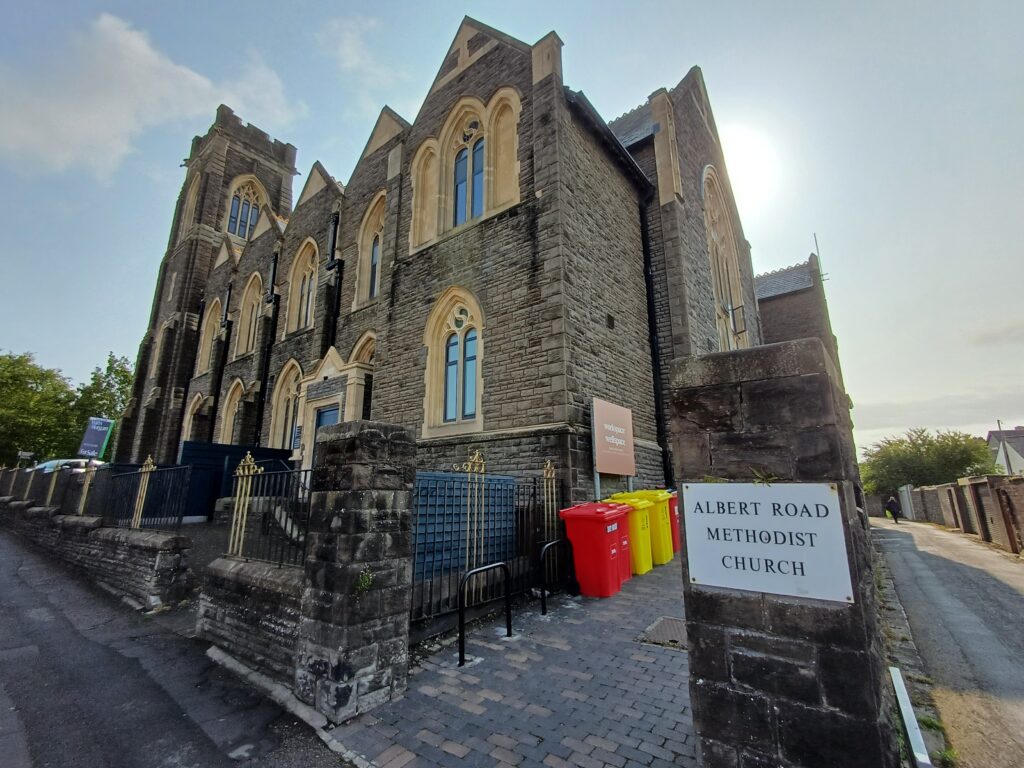
Albert Road Methodist Church
Albert Road Methodist Church is an historic building constructed in 1906 in the Early Decorated Gothic style by architect Henry Budgen. It replaced the Arcot Street Wesleyan Methodist Church, which was destroyed by fire in 1905. The new church featured modern amenities for its time, including ‘tip-up’ seating in the galleries. During World War II, the adjacent schoolroom, repurposed as a NAAFI canteen, was destroyed by fire, but the main church building remained intact. In the 1950s, the schoolroom was rebuilt, and by 1973, the church underwent a transformation into a multi-purpose community facility while continuing to serve as a place of worship. This renovation was among the first of its kind in the UK, involving significant contributions from congregation members. In recent years, the building has been repurposed as ‘Workspace: Penarth’, a modern hub that blends the church’s historic architecture with contemporary functionality, offering flexible office spaces, wellness facilities, and residential units.
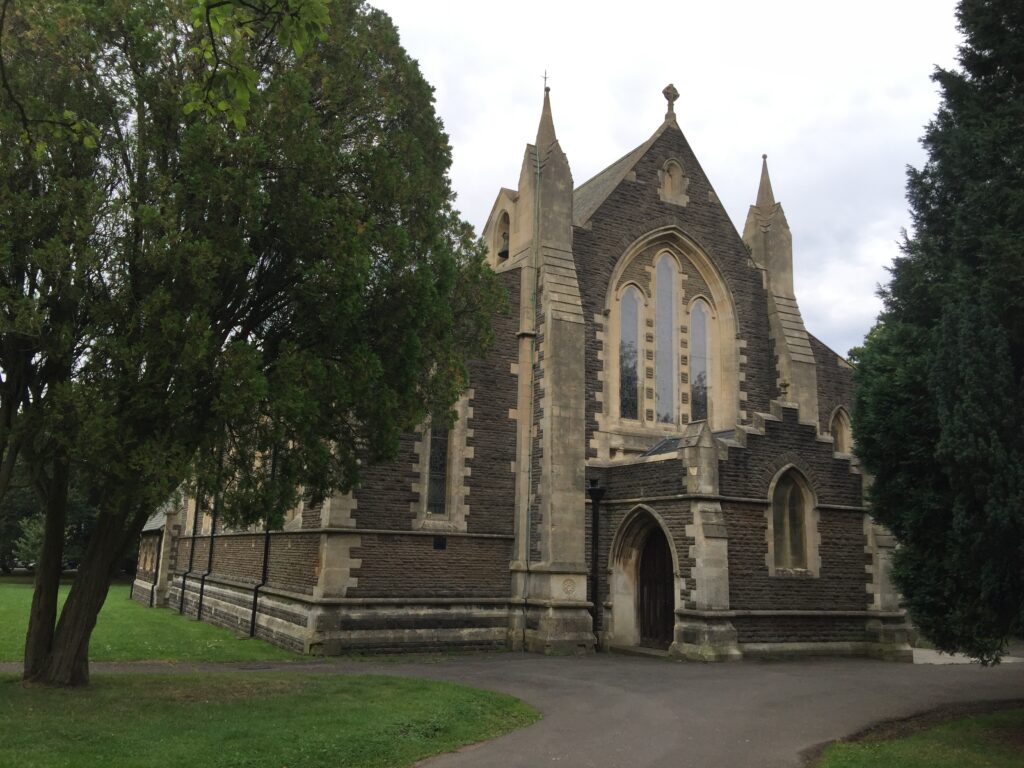
All Saints Church
A prominent Anglican parish situated in Victoria Square. All Saints was originally established as a ‘chapel of ease’ in 1891. The church was constructed between 1889 and 1891, designed by architects JP Seddon and J Coates Carter. Built from Pennant sandstone with Bath stone dressings, it featured a nave with cross-gabled aisles, a full-height chancel, a bell-turret, and a fleche. The church has faced significant challenges over the years. In 1926, a fire gutted the building, leading to a reconstruction by Carter in 1928, which included the addition of a north chapel. During World War II, on March 4, 1941, All Saints was severely damaged by bombing raids, leaving only the outer walls intact. The church was rebuilt and reopened in 1955 under the direction of Sir Percy Thomas & Son, featuring simplified architectural elements and notable stained glass works by artists such as FC Spear and Frank Roper. Today, All Saints serves as a spiritual and cultural hub for the Penarth community, offering a variety of worship services, including traditional and informal gatherings, as well as community activities like knitting groups and a community cinema.
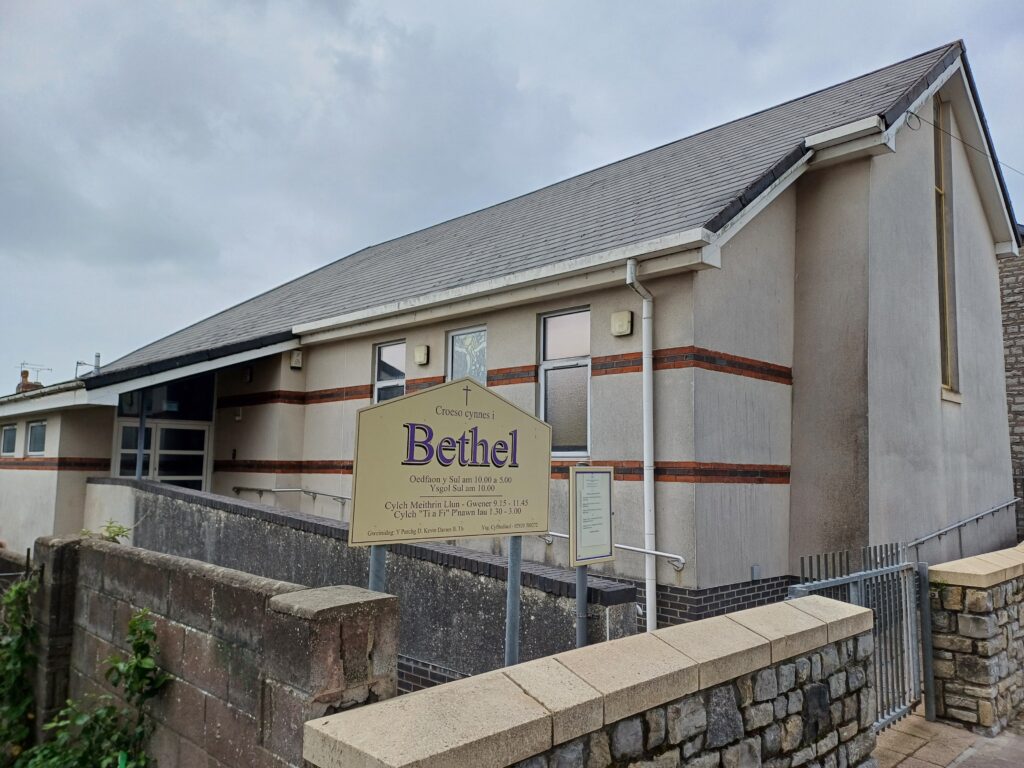
Bethel
Bethel is Penarth’s only surviving Welsh‑language Independent (Congregational) chapel, located on Plassey Street. It was founded in a stable loft in 1864, with the current building erected in September 1879. Although it underwent modernisation in 1981 and a major refurbishment in 1988 – preserving its distinctive ceiling rose, galleries, and ironwork – it has retained much of its historic character. Today, the chapel maintains a congregation of around 90 members and plays an active role in the community. It hosts Ysgol Feithrin Penarth (the town’s Welsh‑language nursery), alongside the Penarth Welsh Society and Merched y Wawr.
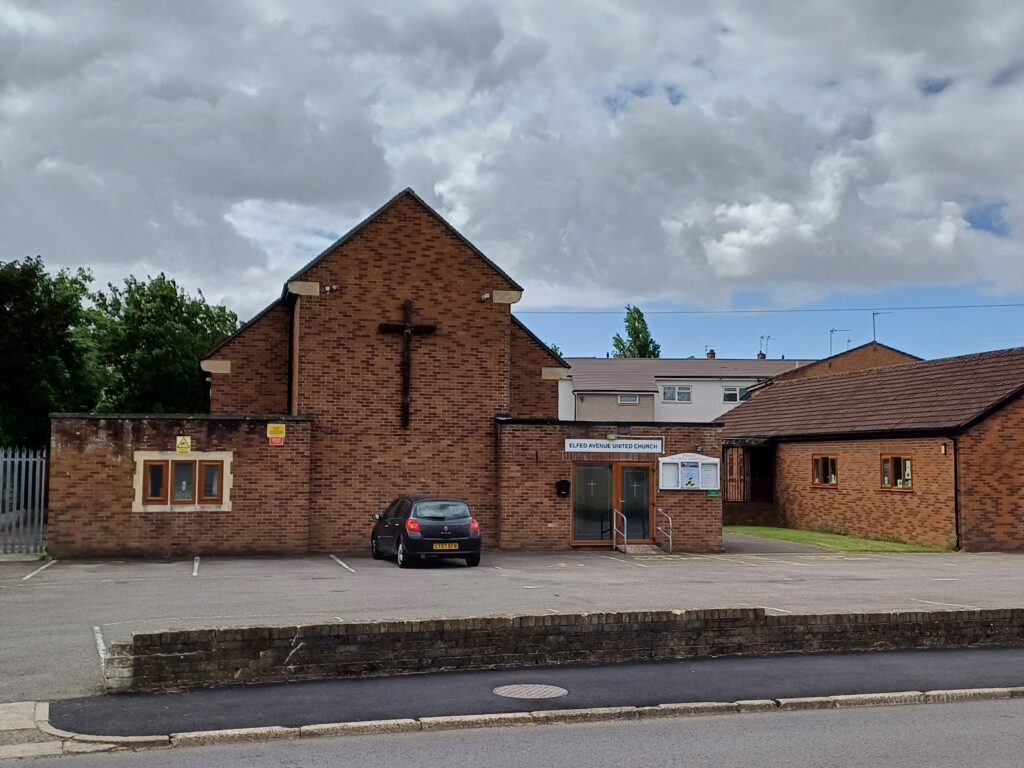
Elfed Avenue United Church
Elfed Avenue United Church in Penarth is a vibrant community church that formed in 1954 through the union of United Reformed and Presbyterian congregations. Known for its outgoing and inclusive atmosphere, it hosts weekly worship services, midweek playgroups for young families and serves as a venue for local groups like the 15th Penarth Scout Group. Managed by Ministers Rev Martha McInnes and Rev David Dean, it functions as both a place of worship and a community hub, offering hall lettings and supporting a range of social activities – all guided by a welcoming ethos.
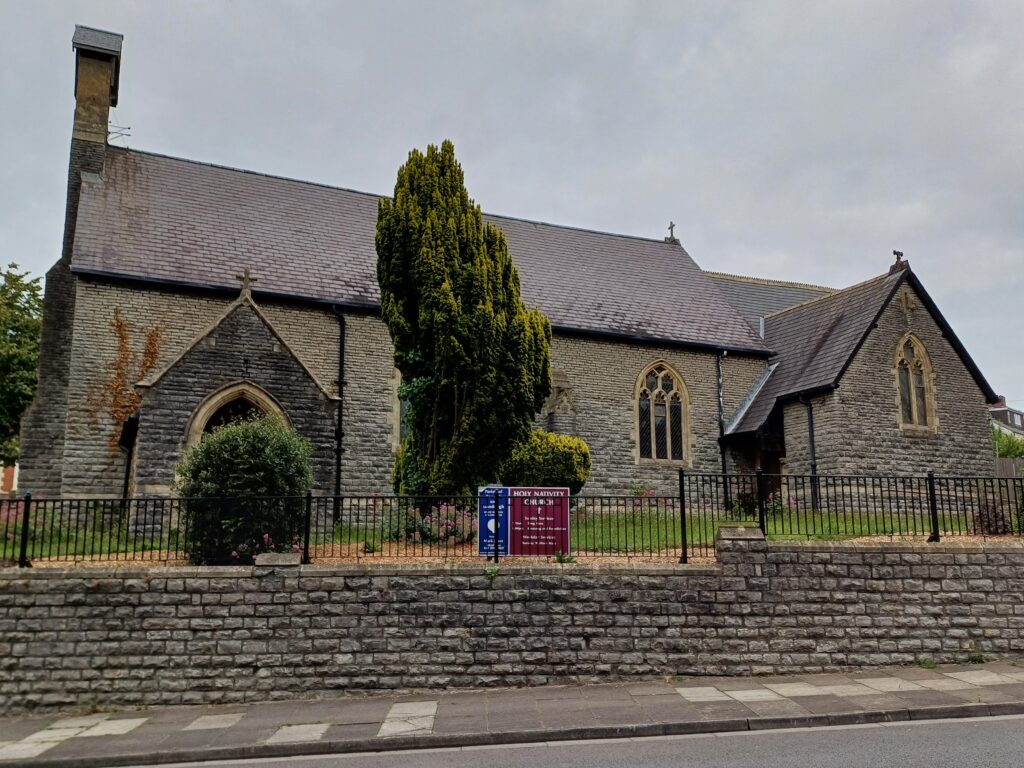
Holy Nativity Church
Holy Nativity Church on Windsor Road, Penarth, was consecrated on January 29, 1894, and initially held services in a converted stable before its stone church was completed. Built in a perpendicular Gothic style, it seated over 300 worshippers. On March 4, 1941, the nave was destroyed by incendiary bombs during World War II; services were then held in the chancel until the church was rebuilt and re-consecrated on February 25, 1953. Adhering to an Anglo-Catholic tradition, Holy Nativity offers morning Sunday Mass and midweek services in a warm, family-like atmosphere, seating around 100 people. The church has recently enhanced its grounds by removing overgrown vegetation, planting new trees and perennials, and creating a wildlife-friendly meadow.
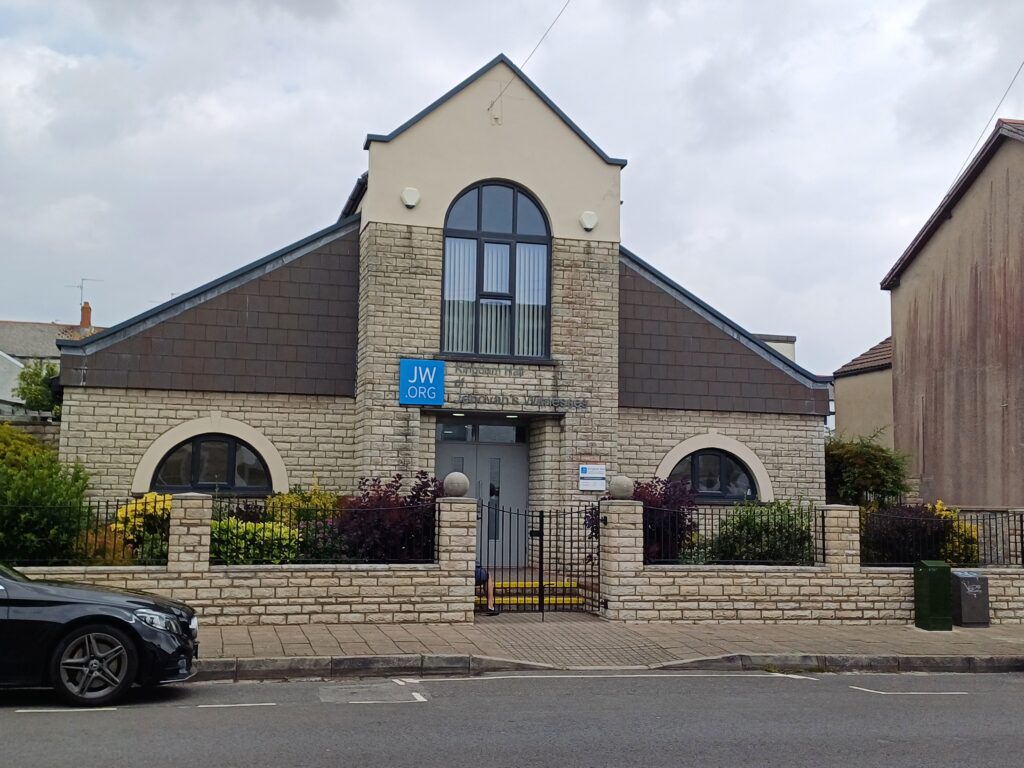
Kingdom Hall of Jehovah’s Witnesses
Kingdom Hall of Jehovah’s Witnesses in Penarth, located on Plassey Street, is a modest, unadorned meeting place where local congregants gather twice weekly for Bible-based worship and study sessions – typically one weekday evening and one weekend meeting. The building serves as a centre for communal learning, prayer, song, and occasional public talks based on Watch Tower Society materials. Open to all without fees, services emphasize voluntary participation and include a blend of readings, hymns and discussions aimed at personal and spiritual growth. Managed by an internal committee of elders and members, the Hall is maintained and supported through voluntary contributions. The Penarth congregation is part of the broader Cardiff Bay group and is known locally for its warm, welcoming atmosphere.
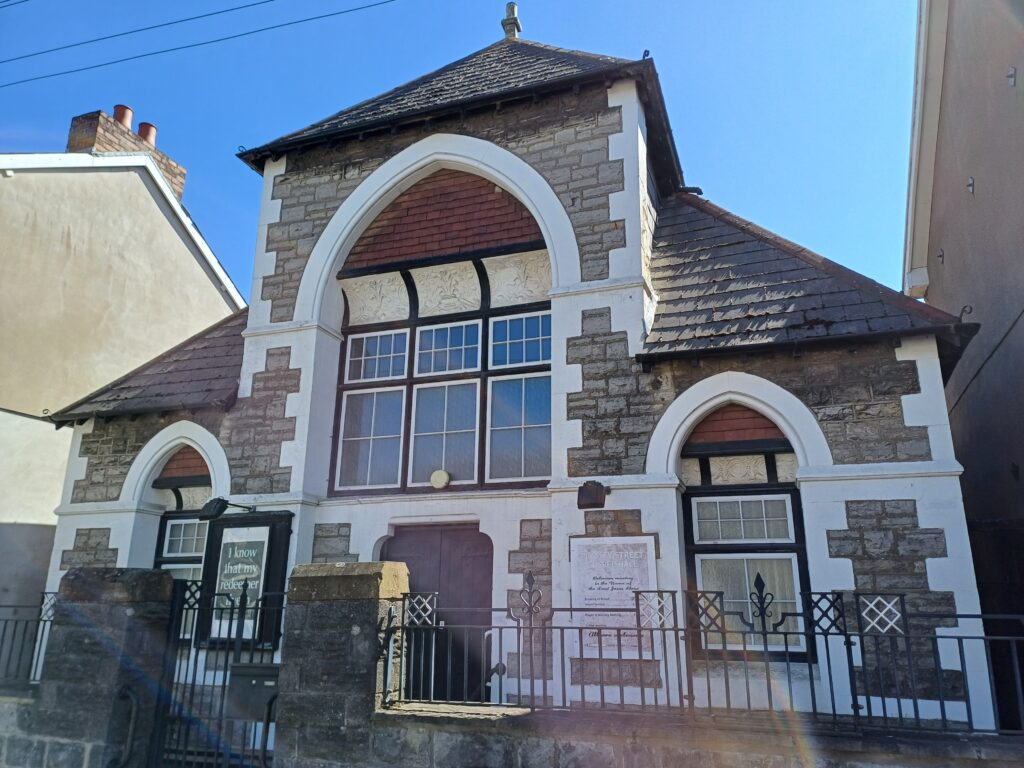
Plassey Street Gospel Hall
Plassey Street Gospel Hall is a modest, yet historic meeting place for the Plymouth Brethren on Plassey Street in Penarth. Built in 1877 in an Arts and Crafts style, it features a characteristic stone façade and plain interior. The Hall holds gospel services and occasional community-focused meetings under the stewardship of a small local assembly. Its location, opposite the Jehovah’s Witnesses Kingdom Hall and near other nonconformist places of worship, reflects its role within Penarth’s long-standing spiritual landscape. While it remains operational, the assembly is small, held together by dedicated regular attenders connected through local fellowship rather than a national church network.
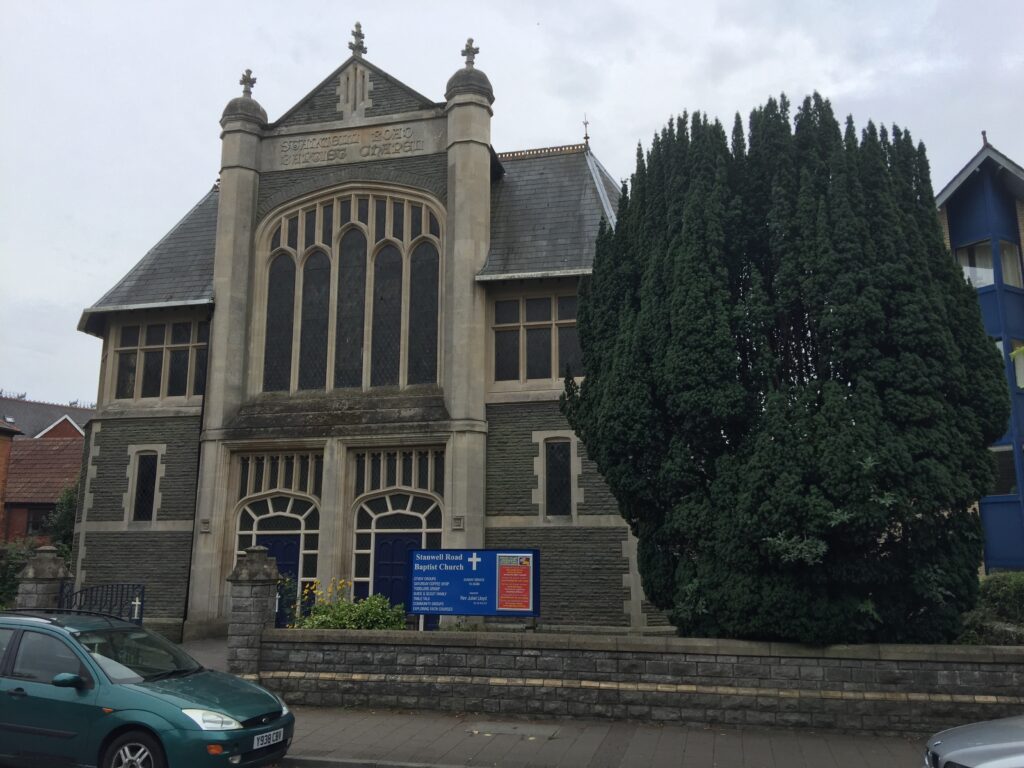
Stanwell Road Baptist Church
Established in 1886 by members from Tabernacle Baptist Church to serve the town’s expanding western residential area, the congregation initially met in a schoolroom built in 1887, before opening their current Tudor Gothic-style church building in 1896. Over the years, the church has been a hub for community engagement, hosting groups such as the 94th Penarth Scouts and Guides and the Eden Church, which holds contemporary services in the building. The church also runs a parent-and-toddler group called ‘Nippers ‘n Natters’ during term time. A brass memorial plaque inside commemorates eight members of the congregation who lost their lives in the First World War.
St Augustine’s
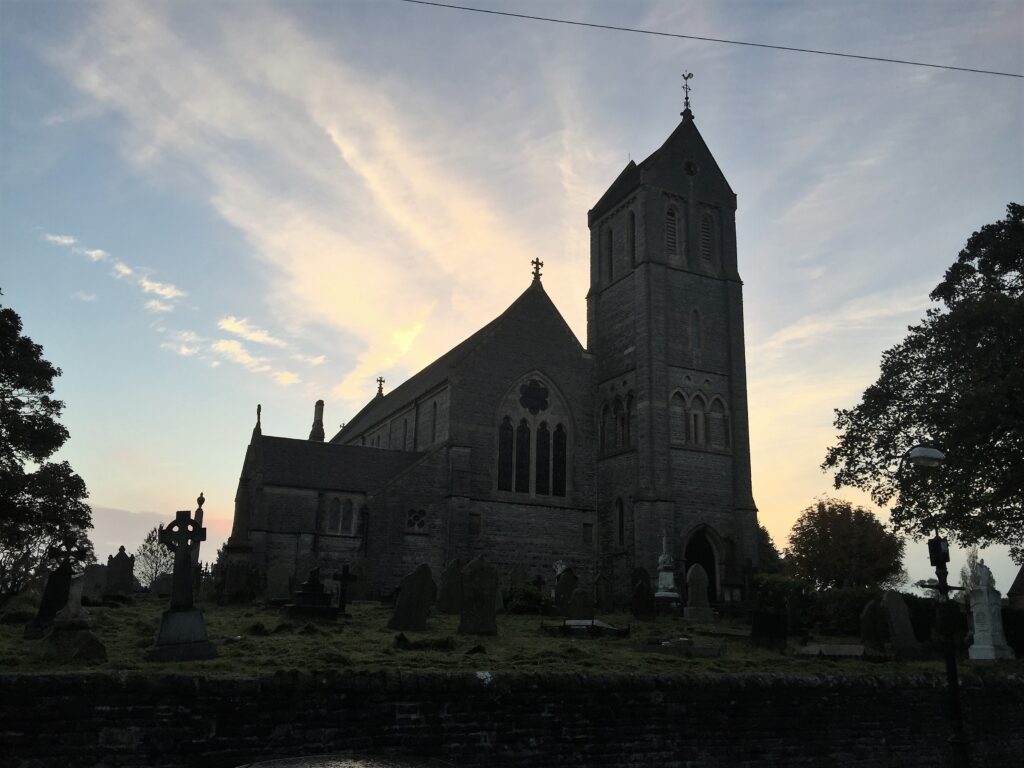
St Augustine’s Church is a distinguished Grade I-listed landmark perched atop Penarth Head, offering commanding views over Cardiff Bay and the Bristol Channel. Originally founded in the 12th Century, the current structure was completed in 1866, replacing a medieval predecessor to accommodate the town’s growing population. Commissioned by Harriet Windsor-Clive, 13th Baroness Windsor, the church was designed by renowned Victorian architect William Butterfield, known for his Gothic Revival style. Constructed from local grey limestone with Bath stone dressings, the church’s most striking external feature is its 90-foot saddleback tower. This tower was intentionally designed to serve as a navigational aid for mariners in the Bristol Channel, continuing the role of the original church’s tower. Notable features include the 1895 William Hill organ, considered one of the finest of its kind, and a medieval churchyard cross now preserved inside to protect it from weathering. The churchyard is the final resting place of several notable individuals, including Welsh composer Dr Joseph Parry, famed for the song ‘Myfanwy’. St Augustine’s continues to be a focal point for the community, and has been home in recent years to popular events such as the Penarth Christmas Tree Festival.
St Dochdwy’s Church
St Dochdwy’s Church in Llandough, near Penarth, has roots tracing back to a 5th-Century Celtic monastic site and saw its first permanent stone church erected in the 12th Century. The medieval church survived centuries before being replaced in the 19th Century, first by an 1820 building that was later moved to Leckwith, and then by the current Gothic Revival structure designed by Samuel Charles Fripp and built in 1866 by local builder David Jones at a cost of £2,600. Consecrated on July 12, 1866, the church incorporates the original Norman chancel arch and features a distinctive saddleback tower with room for two bells, richly patterned polychromatic brickwork, and a striking Celtic ‘Irbic Cross’ in the churchyard dating to the 10th or 11th Century. It was designated a Grade II-listed building in 1989 for its architectural and historical significance. Today, St Dochdwy’s serves the local parish within the Diocese of Llandaff, hosting regular worship and maintaining its legacy as both a historic landmark and active community church.
St Joseph’s Catholic Church
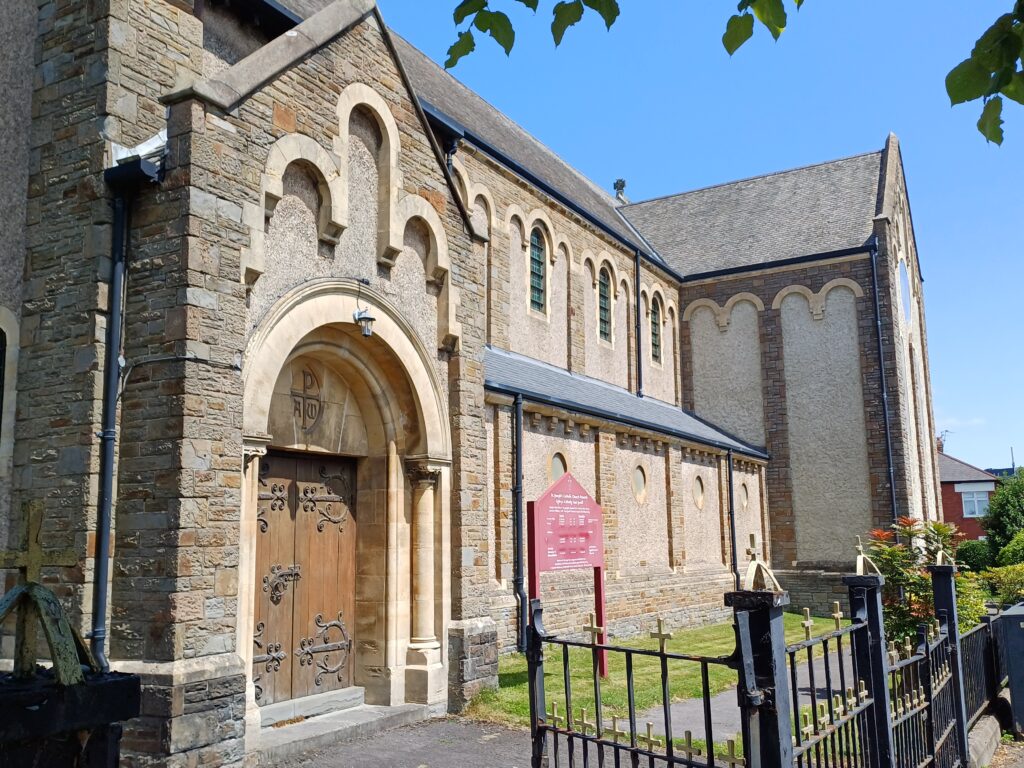
St Joseph’s Roman Catholic Church in Penarth, located at the junction of Wordsworth Avenue and Coleridge Avenue, is a striking early 20th‑century Italian‑Romanesque building designed by prominent architect FA Walters, with work beginning around 1914 and the nave completed by 1915 before final construction post‑World War I in the late 1920s. Built of grey‑brown stone with Bath stone dressings and featuring aisled nave, transepts and apsidal chapels, the interior boasts rich decorative elements including carved marble altars, mosaic Stations of the Cross, and intricately-carved high altar reredos – all crafted by Wall & Co of Cheltenham and added between 1917 and 1919. Designated a Grade II-listed building in 1993, the church also houses finely-crafted stained-glass windows and sculptural details. Today, it remains an active parish within the Diocese of Llandaff, led by Monsignor Joseph Boardman and Deacon Elfed Jones, offering regular Sunday and weekday Masses and serving the Penarth and Dinas Powys community.
St Lawrence’s Church
St Lawrence’s Church at Lavernock Point, just south of Penarth, is a small limestone building with medieval origins – possibly dating back to the 12th Century – though much of it was rebuilt in the Victorian era, retaining elements like the windowless north wall and a chancel arch echoing its medieval past. The church served the manor of Cosmeston and housed gravestones re-used as foundations; it later received a bell in 1747 and maintained its medieval stature until its decline led to redundancy in 2002. Its historical significance includes a plaque commemorating Marconi’s first across-water wireless transmission in May 1897 between Lavernock Point and Flat Holm. After being declared redundant, the building was preserved by an independent charity (SALt), hosting occasional services and community events since 2015 under a licensed trust arrangement.
St Peter’s Church
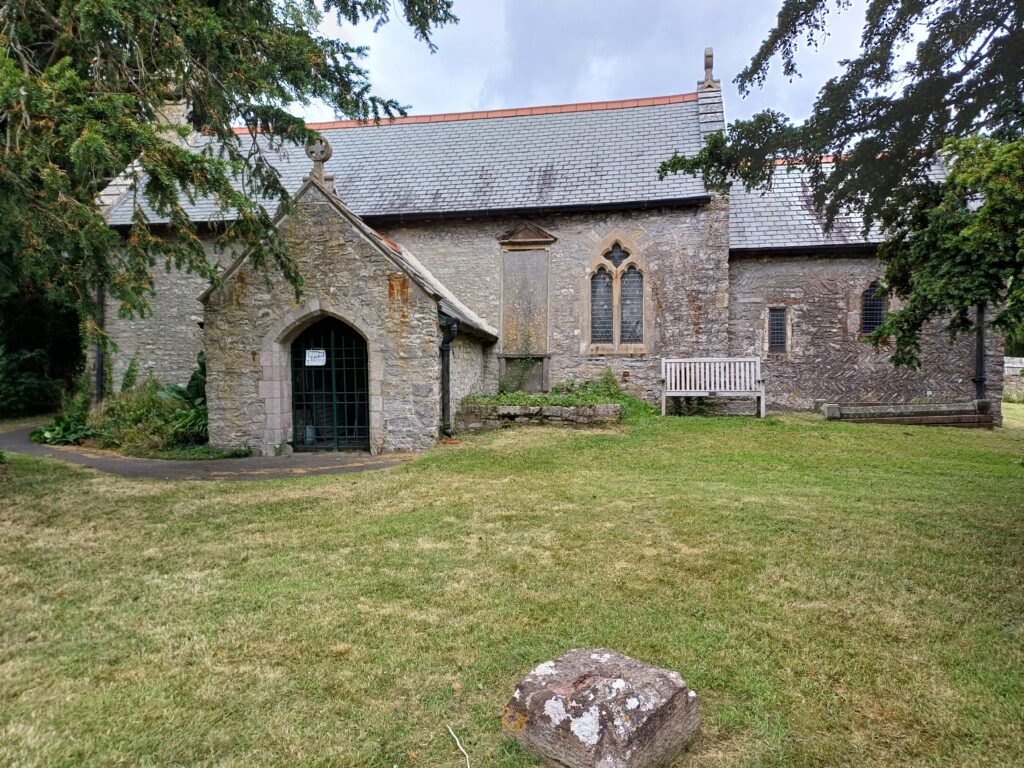
St Peter’s Church (Old Cogan) is the oldest surviving building in the Greater Penarth area; its origins date to the early 12th Century, with the main structure likely erected shortly thereafter. Originally small, the building is characterized by Norman features such as herringbone stonework, and it was extended in the 16th Century. By the 18th Century, the church had fallen into disuse and was even used as a cattle shelter. Between 1884 and 1894, the 3rd Marquis of Bute funded extensive restoration to reconnect the building with its medieval heritage. In September 2017, a £43,000 Heritage Lottery grant supported further conservation work that uncovered original foundations, gravestones, and other archaeological features. Today, St Peter’s remains an active part of the Parish of Penarth & Llandough, holding monthly services (typically on the 2nd Sunday at 3 pm) and opening to visitors on occasion, offering a peaceful, historic retreat accessible via footpath or the Cosmeston Lakes Walk.
Tabernacle Baptist Church
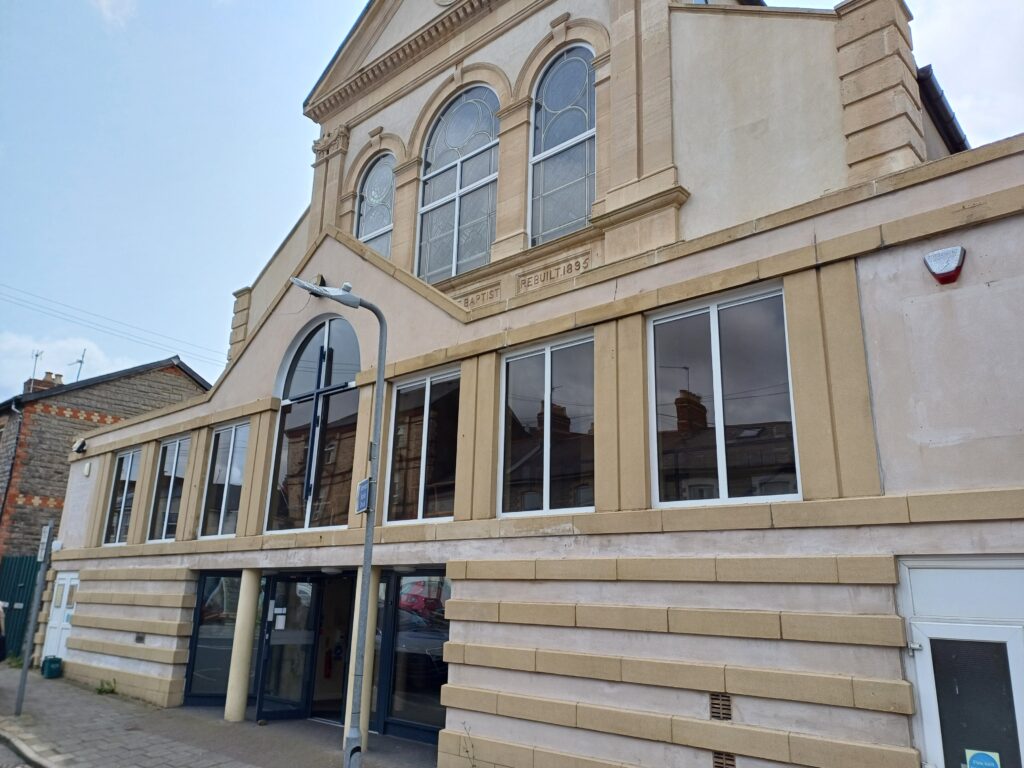
Tabernacle Baptist Church, commonly known as ‘Tabs’, is a vibrant evangelical fellowship located on Plassey Street. Established in the late 19th Century by Baptists from Cardiff’s Bethany Baptist Church, the congregation initially met in various temporary locations before constructing a purpose-built chapel in 1886. This Victorian-era building, accommodating 700 worshippers and a 400-seat schoolroom, has since been modernized to meet contemporary needs. Tabs is characterized by its contemporary worship style, emphasizing inclusivity and community engagement. The church’s motto, “No perfect people allowed”, reflects its welcoming ethos. Regular Sunday services are held, complemented by a range of midweek activities catering to children, youth, adults and seniors. Beyond worship, Tabs actively participates in community outreach initiatives. The church supports the Penarth Foodbank, Home Access and Tool Aid Cymru, among other programmes. It also engages in global mission work through partnerships with organizations like BMS World Mission. For those unable to attend in person, Tabs offers online services via its YouTube channel, ensuring accessibility for a broader audience.
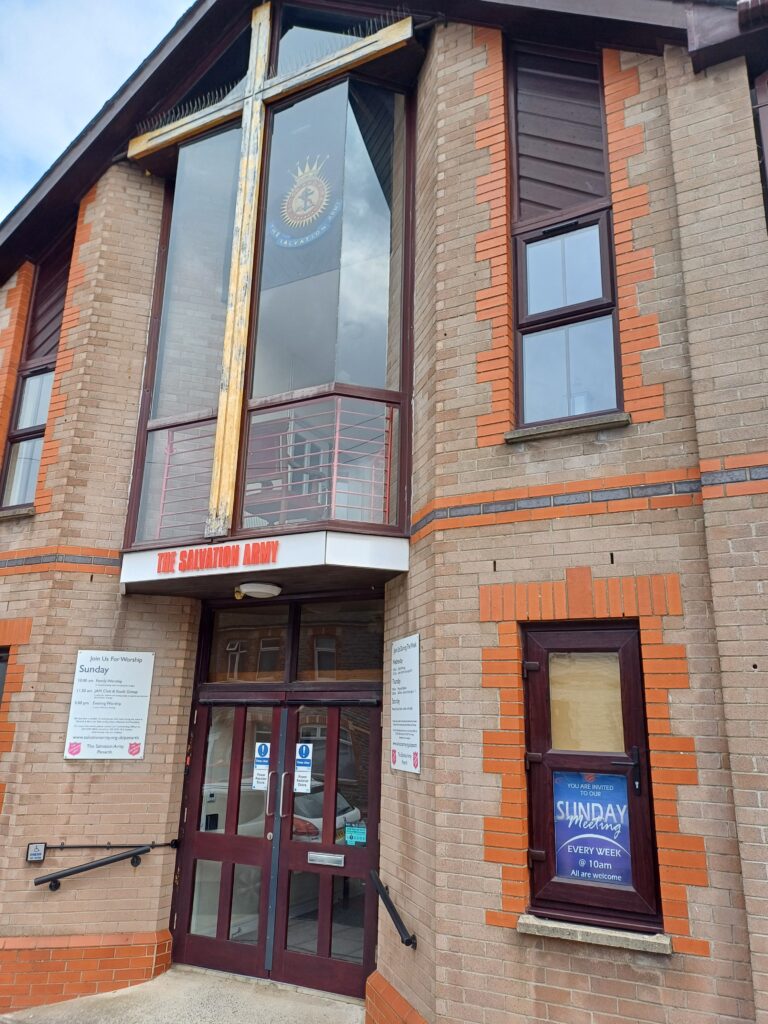
The Salvation Army
The Salvation Army in Penarth is centred at its church and community venue on Plassey Street, offering worship services on Sundays and a variety of weekday social activities such as craft meet-ups, soup & chat gatherings and parent-and-toddler sessions during term-time. It acts as a community hub where local residents can attend lunch groups, monthly social events, and church-led outreach programmes. in addition to the church building, the charity shop on Cornerswell Road operated for over 30 years before closing in late 2023, yet efforts continue to support the town through food donations, volunteering and broader Salvation Army initiatives. The venue is fully accessible with disabled toilets, kitchen and hearing-loop facilities, providing a welcoming gathering space for faith-based, social and charitable activities within the community.
Address: 101a Plassey Street
Telephone: (029) 2070 0858
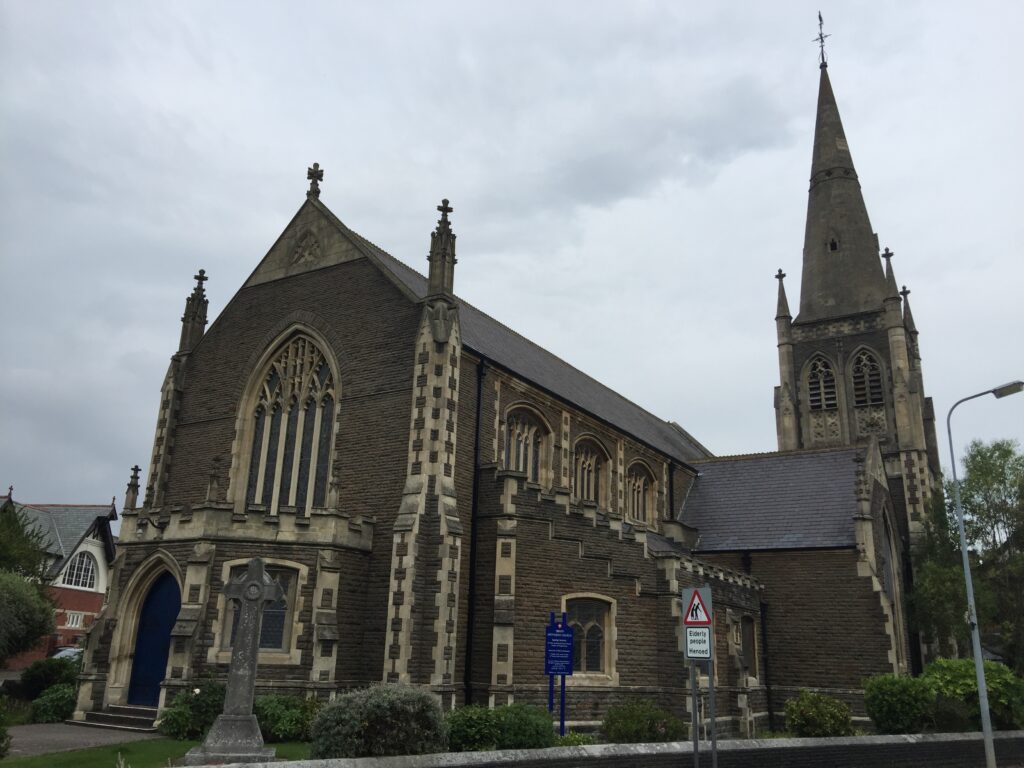
Trinity Methodist Church
A notable example of Victorian Gothic Revival architecture, designed by Cardiff architect Henry Budgen and completed in 1901, Trinity Methodist Church replaced an earlier corrugated iron structure known as ‘Playter’s Church’, which had served the congregation since 1890. The church is distinguished by its imposing spire – the only one remaining in Penarth – and features pointed arches, rich wood panelling, and a marble pulpit added in 1912 that complements its stained glass windows. Throughout its history, Trinity has served as both a place of worship and a community hub. In 1970, it established a day centre for the elderly, and in 1986, the original schoolroom was extensively remodelled to include meeting rooms, a youth club, kitchen and other facilities. The church, on the corner of Woodland Place and Stanwell Road, also houses war memorials and stained glass windows relocated from other Methodist churches, preserving the heritage of congregations that have since closed. Today, Trinity Methodist Church remains an active part of the Penarth Methodist Church community, hosting regular worship services and various ministries.