
Penarth’s Coastal Charm
PENARTH is rich in places and landmarks that reflect its coastal charm, Victorian heritage and vibrant community life.
The seafront is a focal point, anchored by the Penarth Pier, a restored Edwardian structure that remains popular for strolls, fishing and cultural events held in its pavilion.
Nearby, the Esplanade offers sea views, cafés and access to the Italian Gardens, a landscaped terrace with flower beds and seating that harkens back to the town’s resort heyday.
Above the town, St Augustine’s Church stands as a prominent landmark, designed by William Butterfield and offering panoramic views across the Bristol Channel.
The cliff walk from Penarth toward Lavernock Point provides striking coastal scenery and historical interest, including the site of Marconi’s first over-the-water wireless transmission.
Alexandra Park and Windsor Gardens add green spaces within the town, while the Turner House Gallery, once a private collection linked to JMW Turner, now hosts contemporary exhibitions and events.
Inland, Penarth Marina occupies the site of the former docks, blending modern residential living with a harbour atmosphere, and links directly to the Cardiff Bay Barrage, a major engineering project that has become a recreational route and viewing point.
These landmarks together, and more besides, showcase the town’s unique mix of history, nature and civic pride.
PENARTH PLACES OF INTEREST
Alexandra Park
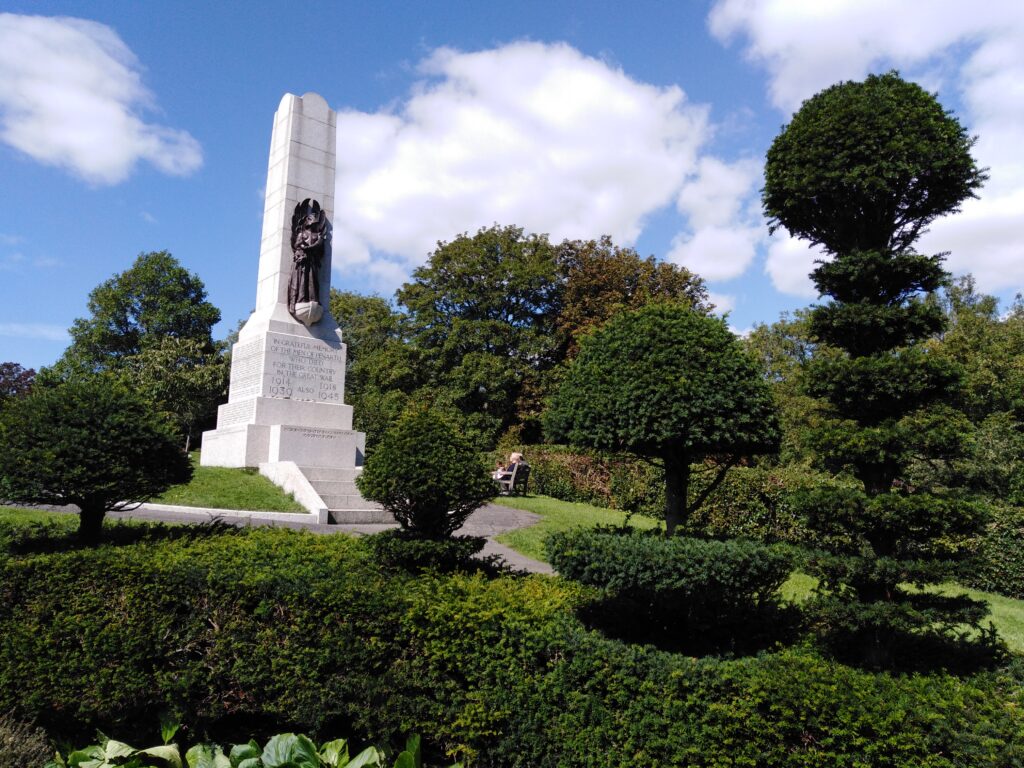
Alexandra Park is a well-preserved Edwardian public park established between 1901 and 1902 on land donated by Lord Windsor. Named in honor of Queen Alexandra, it occupies a sloping site above the seafront, offering scenic views over the Bristol Channel. The park features a network of winding paths, terraced lawns, and formal gardens. Notable elements include the Grade II-listed Cenotaph designed by Sir William Goscombe John in 1924, a Garden of Remembrance, and topiary yew bushes. A small aviary, added in the 1970s, and a pond with a rockwork fountain enhance its charm. Alexandra Park is open daily from 8am until dusk and is managed by the Vale of Glamorgan Council.
Benthyg Penarth
Benthyg Penarth is a community-driven Library of Things, located at The Kymin on Beach Road in Penarth. It offers residents the opportunity to borrow a diverse range of household items – such as DIY tools, gardening equipment, kitchen appliances, camping gear, costumes, and toys – for a small fee, promoting sustainability and reducing waste. Membership is free for personal use, and borrowing fees can be paid through various means, including cash, card, volunteering time, or Time Credits. The initiative also provides an electric cargo bike delivery service within the CF64 postcode area, enhancing accessibility for those unable to visit in person. Benthyg Penarth operates as part of the wider Benthyg Cymru network, aiming to make borrowing as commonplace as buying, thereby fostering a culture of sharing and environmental responsibility within the community.
Website: penarth.benthyg.cymru

Cosmeston Medieval Village
Cosmeston Medieval Village is a living history medieval village, near Lavernock, on the outskirts of Penarth. Based upon remains discovered during a 1970s archaeological dig in the grounds of Cosmeston Lakes Country Park, it is a re-creation of 14th Century peasant life in Wales in the Late Middle Ages. The medieval village is set in the year 1350. It was a fascinating time in history as the village had been given a new boost of life by the de Caversham family. When arranging a visit to Cosmeston Medieval Village it is advisable to call ahead as entry may be subject to tours, events and filming taking place. The Medieval Village is wheelchair-friendly and open seven days per week (gates open: April – September 10am-4pm, October – March 10am-3pm).
Address: Lavernock Road, Penarth CF64 5UY
Telephone: (029) 2070 1678
Flat Holm & Steep Holm
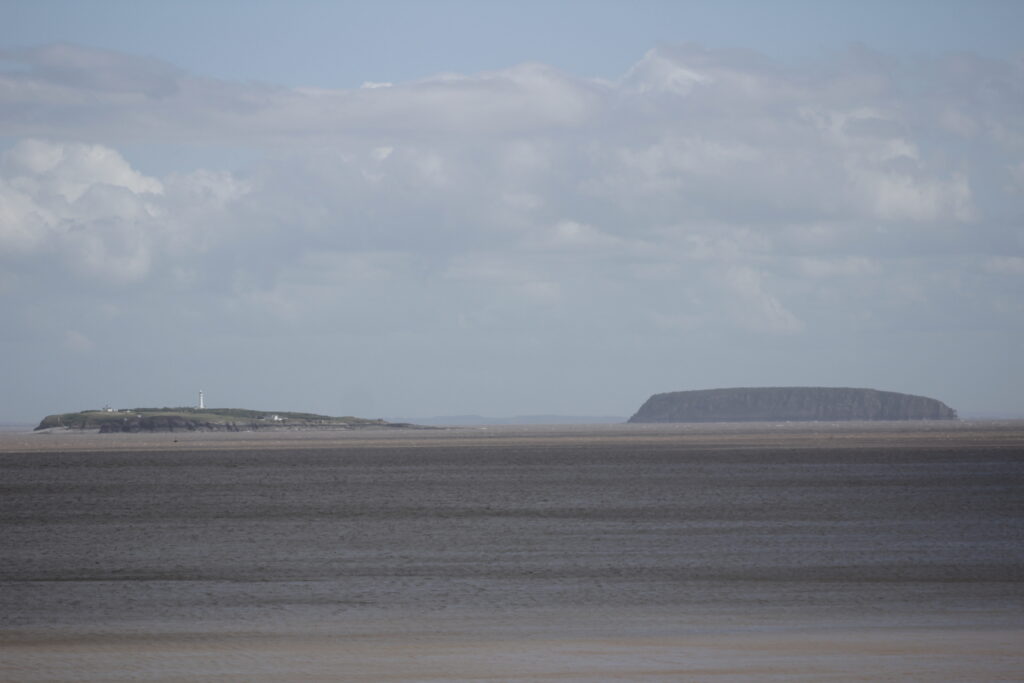
Visible from the coast of Penarth are the tiny island of Flat Holm and Steep Holm. Flat Holm, in particular, is a tourist attraction with a wealth of history and wildlife. Since the Dark Ages, Flat Holm was a retreat for monks and has acted as a sanctuary for Vikings, Anglo-Saxons, silver miners, smugglers and cholera victims. Fortified in Victorian times and again in World War II, it is perhaps most famous for receiving the first ever radio message across water by Marconi in 1897. Flat Holm Lighthouse was built in 1737 in the busy shipping lanes where the Bristol Channel meets the Severn Estuary; the tower was re-engineered in 1820 and 1866. Steep Holm island is uninhabited, except for the birds that find sanctuary there. The island is a nature reserve and Site of Special Scientific Interest. In the past, people lived and worked there from prehistoric times until the 1900s. However, since the 1920s, there have been no human residents. The island is managed by the Kenneth Allsop Memorial Trust and relies on volunteers to help maintain it.
Garden of Remembrance
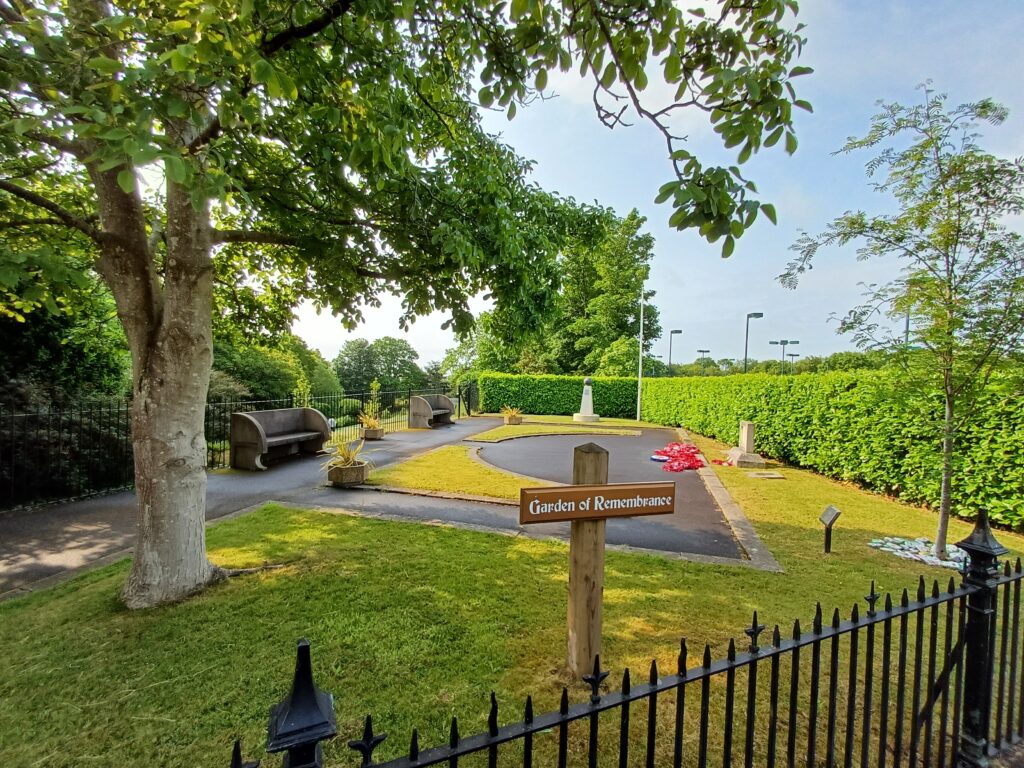
The Garden of Remembrance in Penarth is a tranquil memorial space located near the Rectory Road entrance of Alexandra Park. Established on land donated by the Earl of Plymouth, it was officially opened on Armistice Day, November 11, 1934, to honour those who served in the First and Second World Wars. The original garden featured a rectangular path surrounding a central lawn, with a carved stone of remembrance inscribed with the poignant lines: “They shall grow not old, as we who are left grow old. Age shall not weary them, nor the years condemn.” In 2012, the garden underwent refurbishment to maintain its condition and significance. The Garden of Remembrance continues to serve as a focal point for community commemorations, including Remembrance Sunday services and events honouring local war heroes. Notably, in 2018, two memorial stones were dedicated to Penarth’s Victoria Cross recipients, Captain Richard Wain and Sergeant Samuel Pearse, in a ceremony attended by their families and various dignitaries. This serene garden remains a cherished space for residents and visitors to pay their respects and reflect on the sacrifices made by those who served.
Penarth Marina
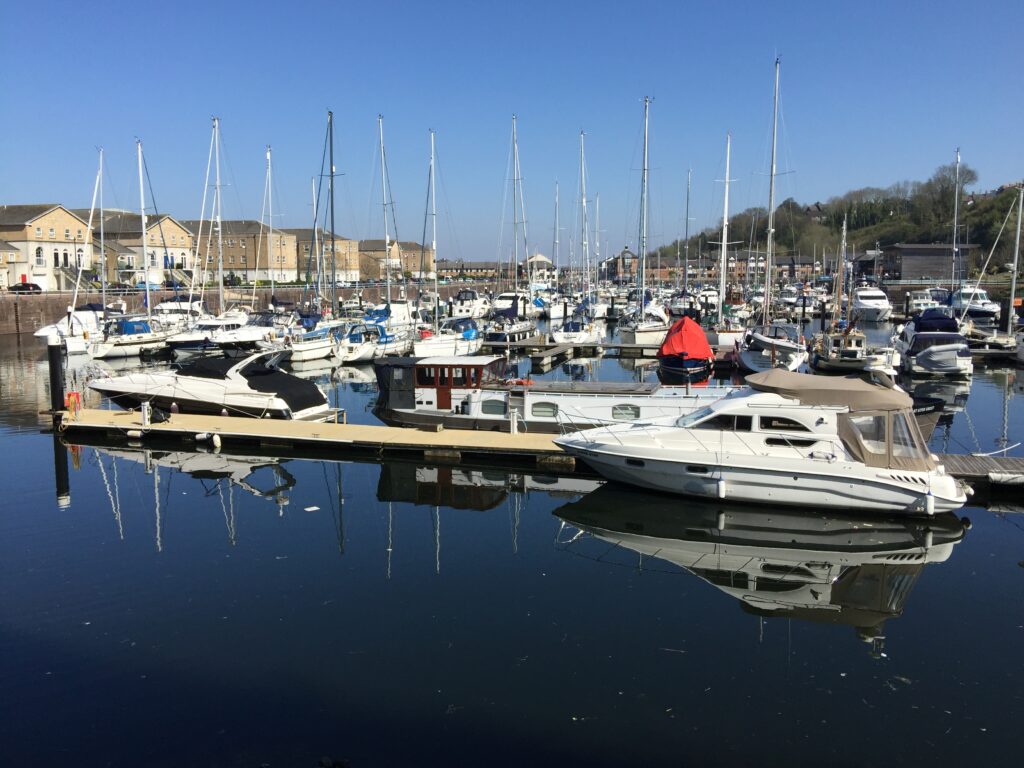
Penarth Marina is both a sheltered location for boats, located in historic basins of the old Penarth Docks, and also the name generally used to describe the surrounding area of modern housing. The marina is adjacent to the waters of the River Ely and Cardiff Bay, situated within the freshwater impoundment created by the Cardiff Bay Barrage. The marina has been awarded 5 Gold Anchors by The Yacht Harbour Association and offers a great range of cruising, social and training activities, with 24-hour access to the water. Services available include a bar, café, training, boat sales, engineering and shipwrights.
Address: Harbour Masters Office, Penarth Portway
Telephone: (029) 2070 5021

Penarth Pier & Pavilion
Penarth Pier stands majestically looking out over the Severn estuary and is home to the iconic 1929 art deco-styled refurbished Pavilion building. Penarth Pier is a Victorian era pier, opened in 1898 and was a popular attraction to seaside-goers at the time, who also enjoyed trips on pleasure steamers that operated from the pier. It has on several occasions been damaged by vessels colliding with the structure and in 1931, a fire broke out in one of the pavilions. This wooden pavilion was never replaced, but a concrete pavilion has been used over the years as a concert hall, ballroom, cinema and for other purposes. It is currently home to the Penarth Pier Pavilion, which offers exhibitions, regular film screenings and a full events schedule, including live music. A café at the Pavilion provides locally sourced food and drink, whilst on the Pier you will find chips and ice cream that can be enjoyed by the sea with picturesque views across the Bristol Channel. Fishing is permitted at the end of the pier except during June, July and August.
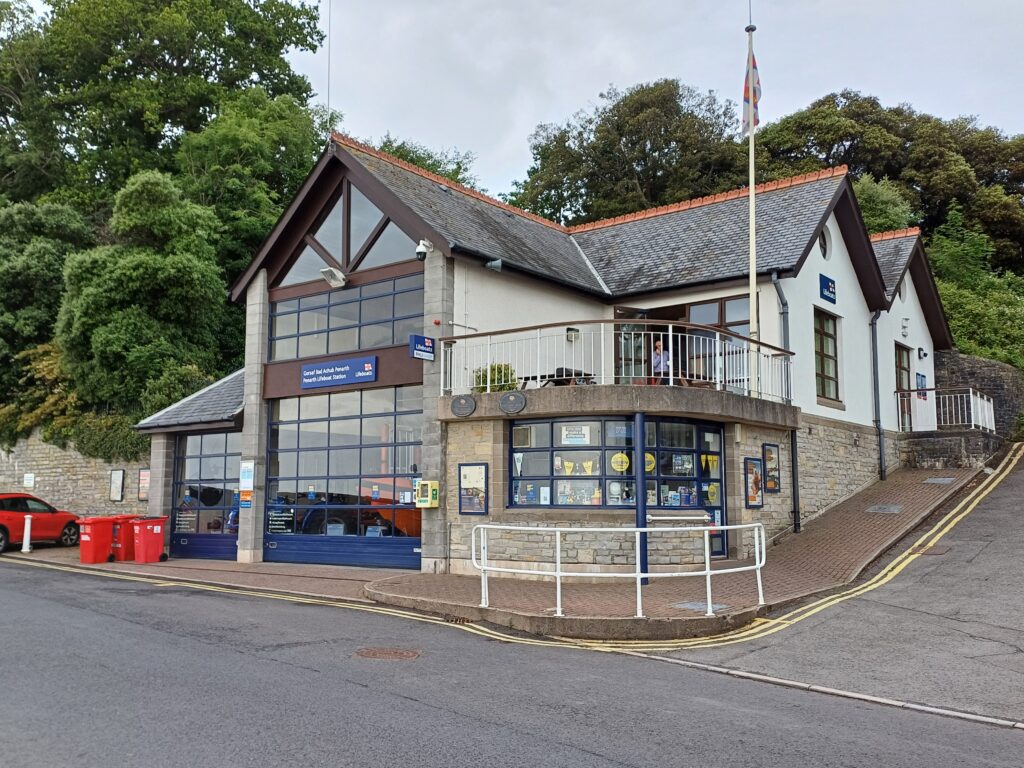
Penarth RNLI Lifeboat Station
Established in 1861, Penarth RNLI Lifeboat Station isrecognised as a vital coastal rescue facility located on the Esplanade at Penarth. The station was initially closed in 1905, but was reinstated in 1980 due to increased maritime activity and the need for local lifesaving services. Today, it operates two inshore lifeboats: the B-class Atlantic 85 Maureen Lilian and the D-class Spirit of Penarth II, both crewed by dedicated volunteers. Over the years, the station has been recognized for numerous courageous rescues, reflecting its enduring commitment to saving lives at sea. The station also welcomes visitors on select Sundays, offering insights into its operations and history.
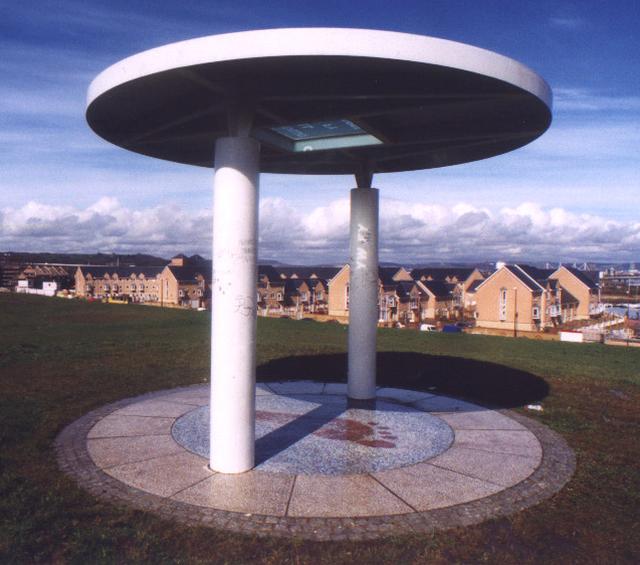
The Belvedere
The Belvedere is a striking public artwork located atop ‘Teletubby Hill’ in Penarth Marina’s Plymouth Park. Designed in 1999 by Welsh-born sculptor Mac Adams, the structure serves as both a sculptural installation and a solar pavilion. Its minimalist, circular canopy is supported by slender columns, creating an open space that invites contemplation and offers panoramic views across the Bristol Channel. A distinctive feature of The Belvedere is its interaction with sunlight. At certain times, the sun projects the Welsh inscription ‘Y Tiroedd Oll Yw Fy Nghorff’ (‘All Lands Are My Body’) onto the ground beneath, blending art with natural light to create a dynamic visual experience.
The term ‘belvedere’ refers to an architectural structure designed to take advantage of scenic vistas, and this installation embodies that concept, offering visitors a place to reflect while enjoying the surrounding landscape.
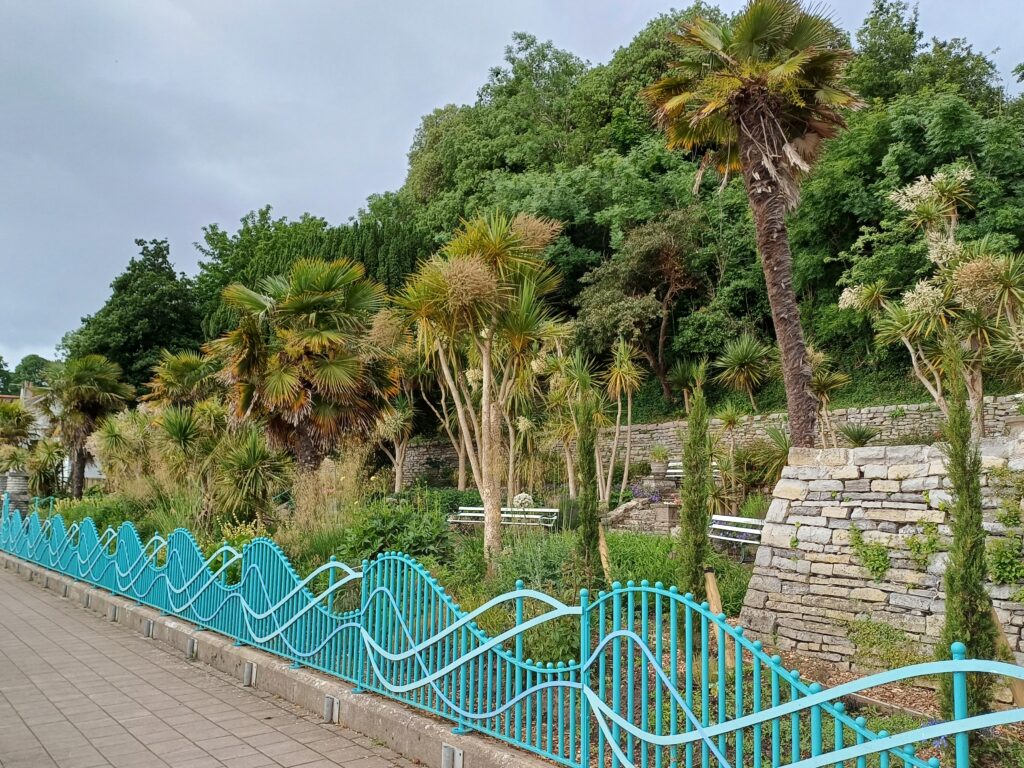
The Italian Gardens
An historic seafront public garden located along The Esplanade, offering a tranquil green space with views over the Severn Estuary. Opened to the public on March 31, 1926, the gardens were developed on the site of old boathouses. The initiative was led by Constance Maillard, then chairperson of the Penarth Town Council, who collaborated with Ursula Thompson, the first female gardener to graduate from Kew Gardens, and Wilfred Evans, known for designing rock gardens in Llanishen, Cardiff. The design was inspired by gardens Maillard had restored in Italy, resulting in a formal, terraced rock garden featuring exotic plants, trees, and shrubs. The gardens are a Grade II-listed site on the Cadw Register of Landscapes, Parks and Gardens of Special Historic Interest in Wales. They retain much of their original layout and structural planting, including features like cordylines, Chusan palms and Irish yews. Maintenance and restoration efforts are supported by the Friends of the Italian Gardens (FIGS), a local community group dedicated to preserving the garden’s heritage and ensuring its upkeep. The group collaborates with the Vale of Glamorgan Council’s Parks & Open Spaces Department while actively preparing for the garden’s centenary celebrations in 2026.
University Hospital Llandough
Located in Llandough, near Penarth, University Hospital Llandough (UHL) is a major NHS hospital managed by the Cardiff and Vale University Health Board. Opened in 1933, it was designed in a pavilion layout to promote patient well-being through exposure to sunlight and fresh air. The hospital became part of the National Health Service in 1948 and was renamed in 2008 to reflect its affiliation with Cardiff University School of Medicine. UHL offers a range of services, including outpatient clinics, maternity and midwifery care, and specialist mental health services through the Hafan y Coed unit, which opened in 2016. In 2021, the hospital expanded its facilities with a new spinal and neurorehabilitation unit, featuring hydrotherapy and independent living spaces. While UHL does not have an emergency department, it provides comprehensive care across various specialties, including cardiology, neurology, and respiratory medicine. The hospital also houses the Rookwood Sound radio station, serving patients and staff.
Website: Cardiff and Vale University Health Board
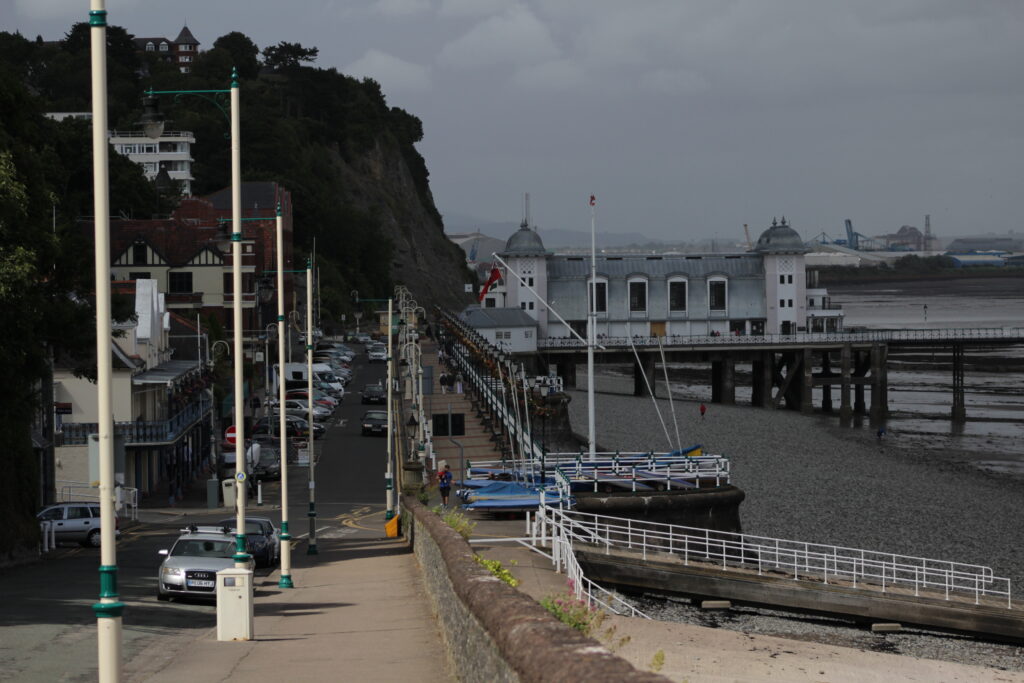
Wales Coastal Path
Penarth sits on a headland overlooking Cardiff Bay. It was a popular Victorian seaside resort and was known as the ‘Garden by the Sea’. It boasted a dock and a railway that linked with Cardiff and Barry. Half of the railway was closed, but was repurposed as a pleasant suburban path. It is easily linked with the Wales Coast Path, which follows a cliff and a promenade before climbing high onto The Kymin.
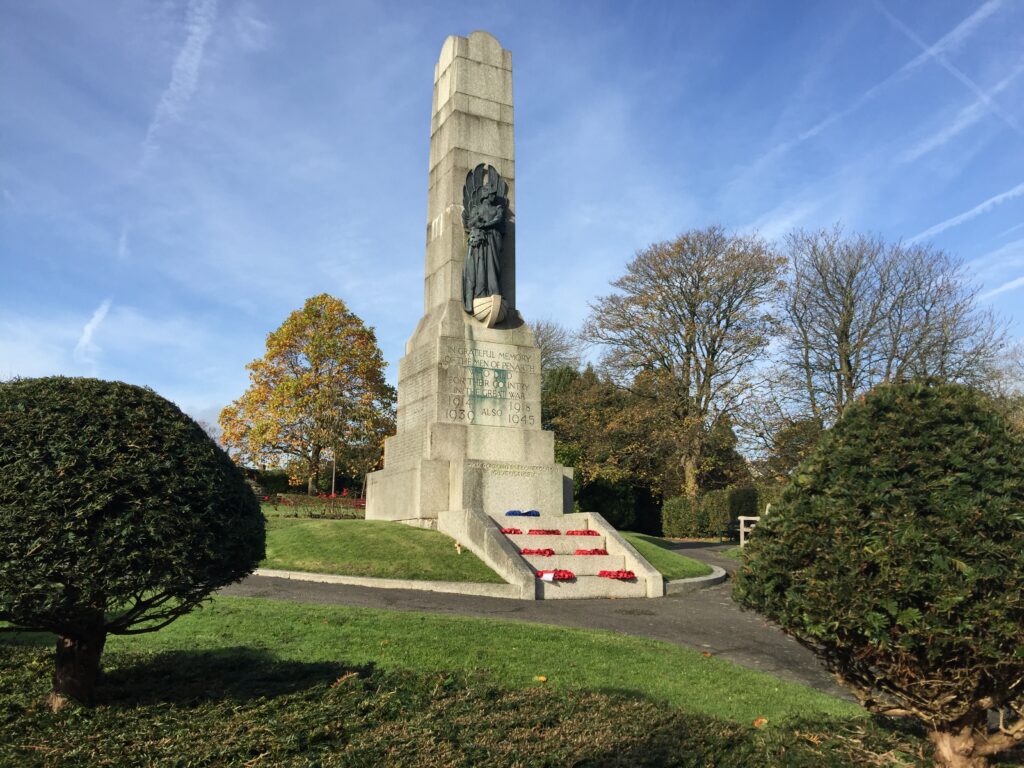
War Monument, Alexandra Park
The Penarth War Memorial, located in Alexandra Park, is a Grade II-listed cenotaph unveiled on Armistice Day, 11 November, 1924. Designed by renowned Welsh sculptor Sir William Goscombe John, the memorial is crafted from white granite and features a bronze statue of Winged Victory holding a sword and laurel wreath, standing on the prow of a ship. The monument bears the inscription: “In grateful memory of the men of Penarth who died for their country in the Great War 1914–1918, also 1939–1945.” Names of the fallen from both World Wars are inscribed on its sides. Notably, it includes the name of Emily Ada Pickford, a local music teacher who died in France while entertaining troops, reflecting the community’s inclusive remembrance. Set on a raised mound with steps leading up, the memorial offers a place for reflection and stands as a poignant tribute to Penarth’s history and those who served.