
Where To Go In Swansea
SWANSEA (Abertawe) spills in a gentle arc around the shimmering sweep of Swansea Bay, a city shaped by sea winds, university energy and the green ribs of the Tawe valley. At its heart, the compact centre blends the Marina and Maritime Quarter with the redeveloped SA1 waterfront, where cranes and copperworks once stood.
The beach runs like a golden footpath from the urban shoreline to Mumbles, the characterful gateway to the Gower Peninsula, whose headlands and coves are the city’s outdoor playground.
Student life radiates from Uplands, Brynmill and Sketty, neighbourhoods of leafy streets and coffee houses, while families gravitate to garden-suburb pockets such as Killay, Dunvant and Tycoch.
Head west and the city unfurls into the Loughor estuary and its old rail-and-tinplate towns. Gorseinon carries the hum of local rugby and independent shops; nearby Penllergaer hides a Victorian woodland valley and lake; Pontlliw threads neat, red-brick streets; Gowerton sits as a handy transport hub between city and Gower; and Waunarlwydd and Fforestfach mark the edge where retail parks meet countryside. North-west, Pontarddulais – “Bont” to locals – keeps a proud cultural streak with choirs and eisteddfod tradition, while Llangyfelach rises towards open fields and the old hill roads of the Mawr. Tucked deeper into that upland parish are small, stone-shouldered communities like Felindre and Garnswllt, where lanes twist past farms and moorland begins.
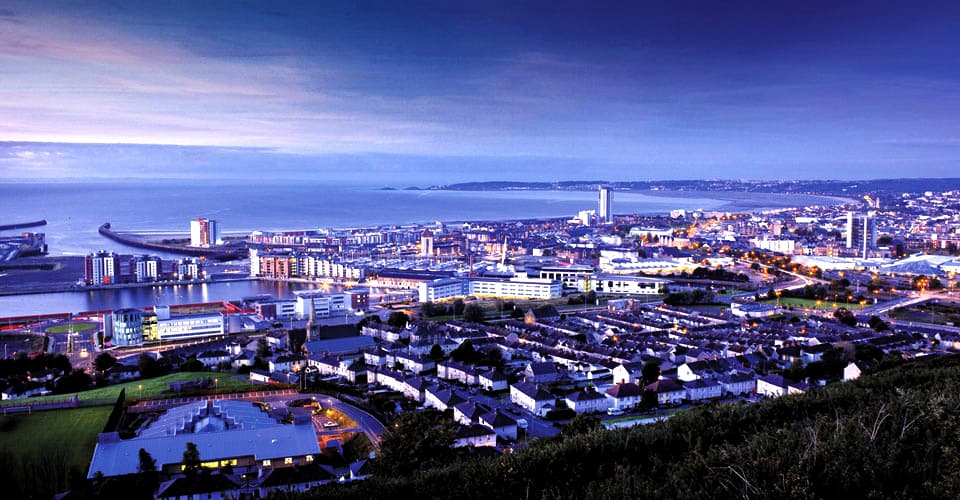
Follow the Tawe upstream and you encounter the city’s industrial backbone. Hafod and Landore, once the smoking heart of ‘Copperopolis’, are reclaiming riverside spaces; over the bridge, St Thomas and Port Tennant look across to the docks with a growing clutch of cafés and creative studios.
Northward, Plasmarl and Treboeth step up the valley to Morriston, one of Wales’s classic planned industrial towns with a strong identity, chapel skylines and a busy high street. Around it, Cwmrhydyceirw, Clase and Ynysforgan spread along the river bends, while eastward Llansamlet, Trallwn and Birchgrove link retail, business parks and old mining terraces with quick access to the M4. Turn north-west at the river’s fork and you reach Clydach, a community framed by canal and woodland, rich in walking and cycling routes and gateway to the uplands.
The Gower itself – Britain’s first Area of Outstanding Natural Beauty – belongs to Swansea, and its string of villages gives the county its distinctive coastal character. Mumbles and Oystermouth bustle with ice-cream parlours, independent boutiques and the pier; up the rise lie Langland and Caswell, twin bays beloved by swimmers and surfers, and inland Bishopston and Kittle keep a friendly village rhythm around the green.
South along the cliffs, Pennard and Southgate look over the famous links and castle-topped dunes, dropping down through Parkmill towards Oxwich and Nicholaston. At the peninsula’s tip, Rhossili gazes across Worm’s Head and the broad sands to Llangennith, a surfing stronghold, while estuary-side Llanmadoc, Cheriton, Llanrhidian, Oldwalls and shellfish-famous Penclawdd stitch north Gower’s saltmarsh edge together. Between bay and estuary, Three Crosses sits on the limestone ridge, a handy jumping-off point for lanes that spill to beaches or back to the city.
University life continues to shape Swansea’s rhythm, drawing research and culture to the parks and promenade, while sport and music fill stadiums and venues on weekends. What’s special is the ease with which the whole county connects: you can sip a flat white in Uplands, browse the market downtown, catch a sunset at Mumbles, and still be in Clydach or Gorseinon in time for a gig or a pint.
From harbour lights in the Marina to starlight on Rhossili Down, the City and County of Swansea is a single, varied place – city, towns, villages and suburbs flowing into one another – bound by water, hills and a quietly confident sense of home.