
Chirk
STRADDLING the Welsh–English border, Chirk pairs big-ticket heritage with village-scale charm. Its Welsh name, Y Waun (‘the moor’), hints at an older landscape of heaths and hillsides that still frame the town today.
Above it all broods Chirk Castle, a late-13th-Century marcher fortress later softened into an elegant country house. Now cared for by the National Trust, it offers grand interiors, clipped hedges, sweeping parkland and views that roll out across the Vale of Llangollen.
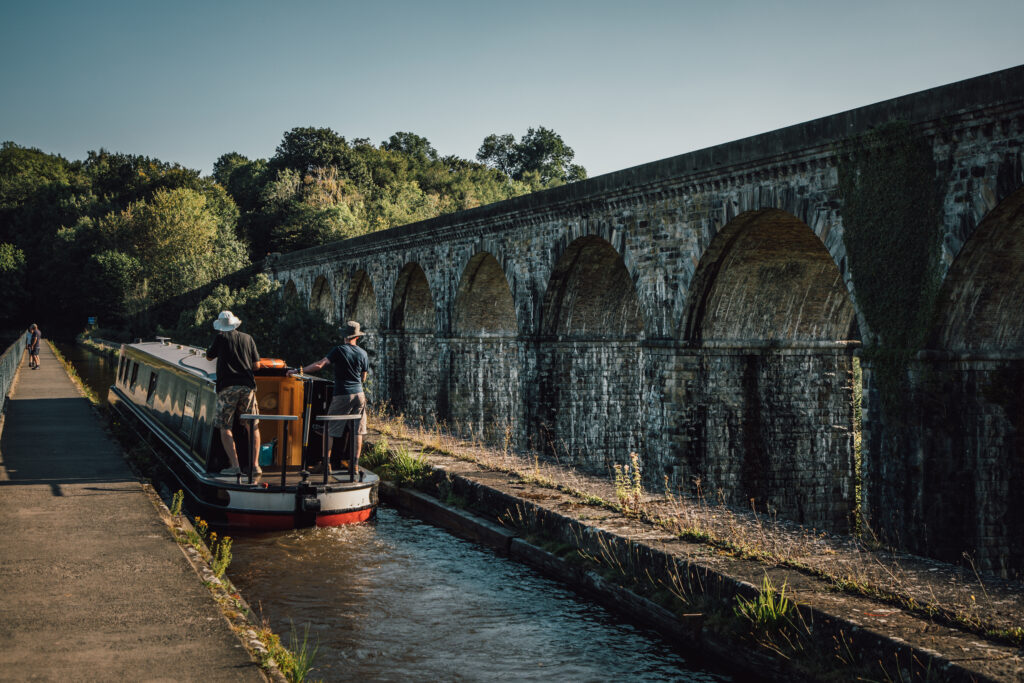
Down in the valley the Llangollen Canal steals the show. Thomas Telford’s Chirk Aqueduct strides across the River Ceiriog on tall arches, with the atmospheric Chirk Tunnel close by; together they form part of the UNESCO-listed Pontcysyllte Aqueduct and Canal.
Walkers can amble the towpath under red-brick viaducts, watch narrowboats slide by, or join the Offa’s Dyke Path as it threads along the ancient earthwork that once marked the border of Mercia.
The wooded Ceiriog Valley, celebrated by Welsh poets, begins on Chirk’s doorstep and rewards gentle rambles with waterfalls, wildlife and stony lanes.
For a small place, Chirk feels lively. A railway station on the Shrewsbury–Chester line makes it easy to reach, and the centre mixes Victorian terraces with independent shops, cafés and friendly pubs.
You’ll hear Welsh and English in equal measure, especially on market days and match afternoons. Whether you come for castle grandeur, industrial-age engineering or simple, scenic wandering, Chirk delivers a compact slice of north-east Wales – historic, walkable and wonderfully photogenic.