
Disaster strikes: The tumultuous tale of Penarth Pier
FROM its grand unveiling in 1895 as a cast-iron promenade and steamer landing built by Mayohs Brothers and engineered by H. F. Edwards, Penarth Pier rose proudly over the Bristol Channel as a symbol of Victorian enterprise.
A slender 658-ft stretch of wooden deck perched on iron supports, delighted seaside-goers and steamship passengers alike, but it was a fragile beauty destined to endure trials that would test its resilience.
By 1907, a charming wooden ‘Concert Party’ pavilion had been installed at the seaward end, only to be supplanted in 1930 by a sleek art-deco ferro-concrete pavilion at the shoreward end, while the wooden Bijou remained – a nostalgic relic of a bygone era.
On an idyllic August Bank Holiday in 1931, as a summer breeze carried music across the deck, disaster struck: a fire erupted, racing through dry timber and decking, sending panicked crowds scrambling for safety.
Miraculously, all 800 people aboard were herded to shore calmly and unhurt even as the pavilion burned, shops gave way, and girders succumbed. The wooden Bijou never returned, its charred wreck replaced only by a modest hut, though the pier itself was restored at a cost of £3,157 and reopened in time for the next season.
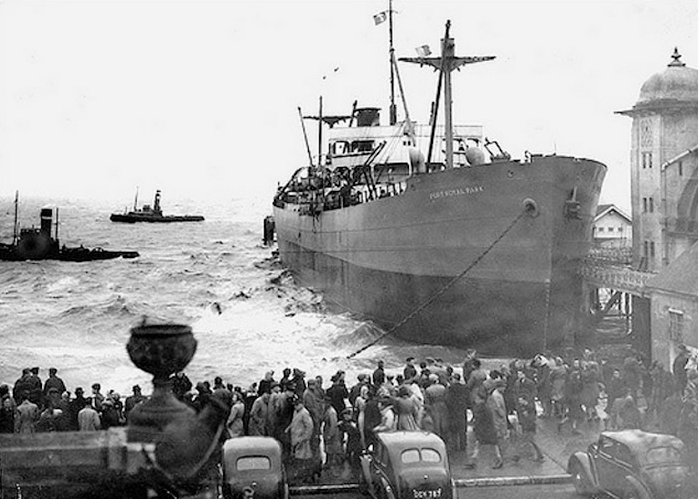
But nature and fate conspired again: in 1947, under savage gales, a mammoth Canadian steamship, the Port Royal Park – estimated at some 7,000-plus tons – rammed into the pier, buckling decking and dislodging over seventy cast-iron columns, forcing a prostrate pier into years of costly repair involving concrete reinforcements and underpinning totalling £28,000 before reopening in 1950.

Then came another blow: in the thick August fog of 1966, the pleasure steamer PS Bristol Queen collided with the pier, inflicting damage worth another £25,000.
The pier’s Renaissance began decades later: throughout the 1990s, gradual restoration – structural repairs, deck replacement, reinforcements – cost millions; by 1998 it was structurally sound again, but its crown jewel, the art-deco pavilion, awaited revival. Funded by the Heritage Lottery, Welsh Government, Cadw, and local authorities, a near £4million refurbishment transformed it into a café, gallery, cinema, observatory and auditorium.
So from its 19th-Century origins to catastrophic blaze, ship collisions, and fog-shrouded collisions, through to rebirth in the 21st Century, Penarth Pier’s story is one of beauty besieged but not broken – a living monument to human creativity, danger, and enduring preservation.
Watch: THE PENARTH PIER COLLISION