

The Prince of Wales, Cardiff
THIS Grade II listed building is the former Prince of Wales Theatre, where the likes of great actors Richard Burton, Noel Coward and Laurence Olivier performed. It was built, facing Wood Street, in 1878, replacing the New Theatre Royal which had burned down. The Prince of Wales was, itself, rebuilt and an entrance added on St Mary Street. It later became, among other things, a cinema, then a nightclub and was converted into a pub in 1999.
The Prince of Wales pub in Cardiff is one of the city’s most recognisable landmarks, occupying a building that has stood at the heart of Cardiff’s cultural and social life for nearly a century and a half.
The original New Theatre Royal, designed by architect William Dinsdale, was a grand and ambitious project, reflecting the confidence of a city that was rapidly expanding as a result of its booming coal and shipping industries. Its opulent façade and richly decorated interior made it one of Cardiff’s premier entertainment venues, drawing audiences for dramas, operas, and music hall performances throughout the late 19th and early 20th centuries.
In 1920, the theatre was renamed the Prince of Wales Theatre, in honour of the title traditionally held by the heir to the British throne. During the inter-war years, it continued to thrive, hosting touring productions, variety acts, and local performances. However, by the mid-20th Century, changes in public entertainment preferences — particularly the rise of cinema — began to erode the theatre’s audience base.
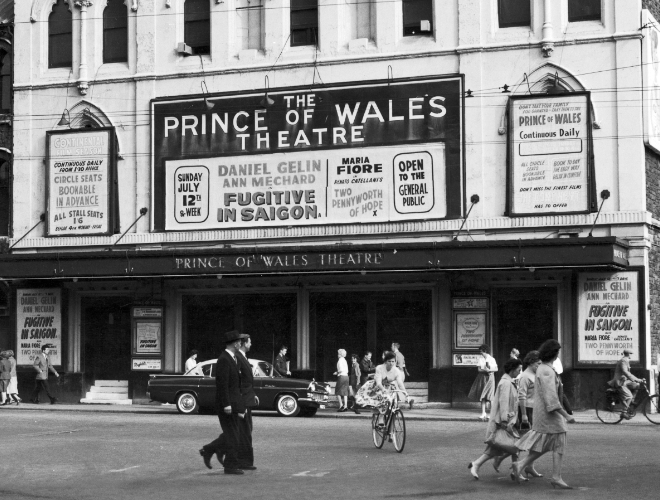
In 1927, it was converted into a cinema, becoming part of the burgeoning film culture of the time. Over the following decades, it changed hands several times and underwent various refurbishments, operating under different names including the Gaumont and the Odeon, before finally closing with a reputation as a somewhat seedy cinema in 1974.
For a time, the building found new life as a bingo hall, which sustained it through the late 20th Century, but by the late 1980s it had fallen into disrepair. Its once-grand auditorium deteriorated, and the structure became derelict, standing empty for over a decade as Cardiff underwent major redevelopment around it.
In 1999, J D Wetherspoon purchased the property and undertook an extensive restoration project, reopening it as The Prince of Wales pub. The conversion preserved much of the original Victorian architecture, including ornate plasterwork, the proscenium arch, and the gallery balconies, giving patrons the sense of drinking and dining within a restored theatre. The building’s history is celebrated through its décor, which features period photographs and theatrical memorabilia.
Today, The Prince of Wales is a thriving part of Cardiff’s nightlife and a cornerstone of St Mary Street’s hospitality scene. It serves locals, students, and visitors alike, often bustling on match days and weekends. More than just a pub, it stands as a living monument to Cardiff’s evolving social life — from the age of gaslit theatres and early cinema to the modern city’s vibrant pub culture — linking the capital’s Victorian grandeur with its contemporary energy.