Charlotte Church
CHARLOTTE CHURCH has experienced several careers within one lifetime – child classical phenomenon, international recording star, pop singer, television presenter, experimental performer, campaigner, educationalist and, more recently, founder of a retreat in the Welsh countryside.
Born Charlotte Maria Reed in Cardiff on February 21, 1986, and raised in Llandaff, she became famous extraordinarily young. Her breakthrough came at the age of 11 when she sang Andrew Lloyd Webber’s Pie Jesu over the telephone on ITV’s This Morning, followed by an appearance on The Big, Big Talent Show.
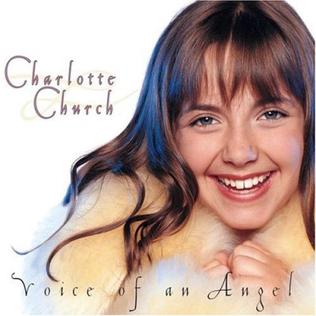
Her debut album, Voice of an Angel, followed in 1998. A collection of sacred, classical and traditional music, it became an international success and reached No.4 on the UK Albums Chart. Church was still only 12 when the album turned her into a global star.
Over the next few years she performed around the world and appeared before figures including Pope John Paul II, Queen Elizabeth II and US President Bill Clinton. By her early twenties she had sold more than 10 million records.
Albums including Charlotte Church, Dream a Dream and Enchantment established her as one of the best-known performers associated with the classical-crossover boom around the turn of the millennium. She sang in English, Welsh, Latin, Italian and French and appeared regularly on American television as well as performing in major venues around the world.
Church also contributed vocals to the soundtrack of Ron Howard’s Oscar-winning film A Beautiful Mind, including the closing song All Love Can Be. By her mid-teens, however, she was already beginning to explore a musical life beyond the classical repertoire that had made her famous.
That transformation became unmistakable in 2005 with Tissues and Issues, her first full pop album. It reached No.5 in the UK, while the single Crazy Chick climbed to No.2 on the UK Singles Chart.
For audiences who had grown accustomed to the teenage “Voice of an Angel”, the transition was dramatic. But it established a pattern that would recur throughout Church’s career: a reluctance to remain confined by the image or musical identity which had previously brought her success.
Television provided another reinvention. The Charlotte Church Show launched on Channel 4 in 2006, mixing celebrity interviews, comedy and music. Church won the British Comedy Award for Best Female Comedy Newcomer that year. She also made numerous television appearances and in 2014 played Mrs Ogmore-Pritchard in the BBC adaptation of Dylan Thomas’s Under Milk Wood.
During the 2010s her music moved in a more experimental and independent direction. She released a sequence of EPs and embraced alternative rock, electronic and theatrical influences far removed from both her classical beginnings and her earlier mainstream pop career.
One of the most distinctive results was Charlotte Church’s Late Night Pop Dungeon.
Developed into a cult festival and live-music experience, Pop Dungeon was less a conventional concert than a constantly shifting musical collage, with Church and her musicians moving between pop, rock, dance music and unexpected covers.
After more than a decade, the project reaches what is being billed as its final chapter with End Times Pop Dungeon at DEPOT Cardiff in September 2026. The venue describes Pop Dungeon as one of Britain’s most original live experiences and the Cardiff performance as its concluding incarnation.
Church’s public life has also extended well beyond entertainment. Her experience of intense press attention led to an appearance before the Leveson Inquiry into media ethics, and she subsequently became involved with the campaign group Hacked Off. Over the years she has also spoken publicly on social, environmental and cultural issues.
Education has become another significant part of her work.
In 2019 Church founded The Awen Project, a charity supporting small democratic learning communities in which young people are encouraged to participate actively in shaping their education. Church remains the organisation’s founder and chair of trustees.
Perhaps the most unexpected chapter of all, however, can be found near Rhayader in Mid Wales.
In 2020, Church acquired Rhydoldog House, a former home of designer Laura Ashley set within 47 acres in the Elan Valley. Working with collaborators, she transformed the property into The Dreaming, a retreat centred around nature, creativity, rest and wellbeing.
The Dreaming has since developed an extensive programme of residential and day retreats. Its 2026 programme includes seasonal retreats as well as Song of the Soul, led by Church and using sound, story and voice as part of the experience.
It represents another striking turn in a career that has repeatedly defied expectations.
The girl who became internationally famous singing Pie Jesu has grown into an artist whose interests now encompass experimental performance, education, nature and community as well as music.
Yet Wales has remained a constant thread.
From her childhood in Llandaff and early performances in Cardiff to Under Milk Wood, Pop Dungeon and The Dreaming in the Elan Valley, Charlotte Church’s career has continually returned home even while taking her around the world.
More than a quarter of a century after Voice of an Angel first made her famous, she remains one of the most distinctive and unpredictable figures in contemporary Welsh cultural life.