
From Vesta all the way to Chippy Lane: How Curry Became Part of Welsh Life
THERE was a time when curry still seemed rather exotic in many Welsh homes.
For some people of a certain generation, their first encounter with anything resembling an Indian meal may not have involved a restaurant at all. It might have arrived in a cardboard box bearing the name Vesta.
Fast-forward a few decades and things could hardly be more different.
Indian restaurants and takeaways are now part of the landscape of towns and cities across Wales. Friday-night curry has become a ritual. Chicken tikka masala has entered the comfort-food vocabulary. Indian street food appears at festivals. Welsh lamb finds its way into biryanis and curries.
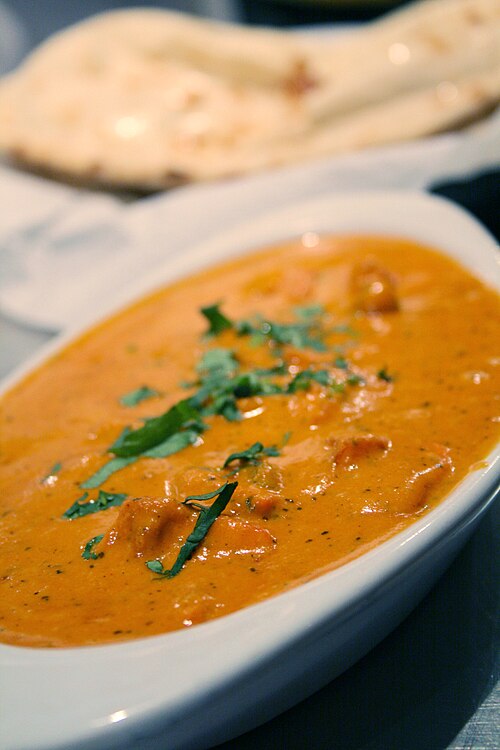
And somewhere along the journey, Smithy became fiercely protective of his bhunas and chicken curry with chips became part of the folklore of Cardiff’s famous Chippy Lane.
Curry has not simply arrived in Wales.
In its own peculiar way, Wales has made curry part of everyday life.
When curry still felt adventurous
Indian food in Wales goes back much further than many people might imagine.
Cardiff’s Bombay Café, now long gone, has been described as the city’s first Indian restaurant, opening only around a quarter of a century after London’s famous Veeraswamy opened in 1926.
But for many Welsh families in the post-war decades, Indian restaurants were still unfamiliar territory.
Enter Vesta.
Those little boxed meals offered the possibility of something supposedly far more adventurous without leaving the kitchen.
Archive television advertisements from the mid-1960s show Vesta beef curry being marketed with phrases such as “From Vesta with love”, while a 1967 chicken curry campaign encouraged households to “try something different”.
Authentic Indian cuisine it most certainly was not.
But culturally, Vesta mattered.
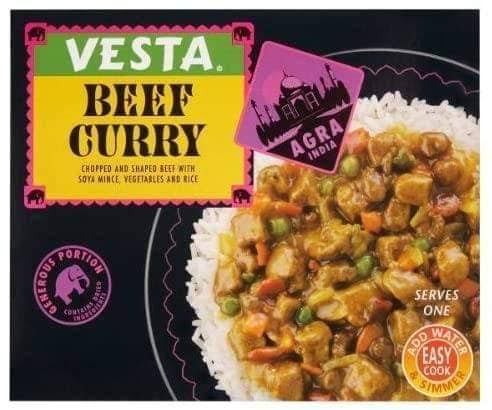
It helped introduce the idea that curry could be something cooked and eaten at home rather than an unfamiliar dish encountered somewhere else.
Ask enough Welsh people who grew up in the 1960s and 70s about Vesta curry and there is a reasonable chance of producing either a nostalgic smile or a slightly haunted expression.
Sometimes both.
***
Is chicken tikka masala Wales’ favourite meal?
Possibly. Possibly not.
We are not going to pretend there has been an exhaustive national referendum on the subject.
But walk into enough curry houses around Wales and it would be difficult to argue that chicken tikka masala has not become one of the great staples of the British-Welsh takeaway menu.
And that is really the interesting part of the story.
Over time, curry stopped feeling unusual.
Korma, madras, vindaloo, bhuna, jalfrezi, balti, biryani and tikka masala became words people recognised without needing a glossary.
Families developed favourite restaurants. People had their regular orders. Arguments developed over spice levels.
And, inevitably, somebody ordered chips.
***
Smithy and the most famous curry order in Welsh television
No discussion of curry and Wales would be complete without Gavin & Stacey.
In one of the programme’s most quoted scenes, Smithy faces what he regards as an appalling prospect: sharing an Indian takeaway.
His order is magnificent in both scale and specificity:
chicken bhuna, lamb bhuna, prawn bhuna, mushroom rice, chips, keema naan, saag aloo and nine poppadoms.
His real concern is not the quantity.
It is that somebody else might start eyeing up his bhunas.
It is funny because it is so recognisable.
Almost everybody who has participated in a group takeaway order knows the negotiations. One person wants mild. Another wants hot. Somebody says they will “just have a bit of everyone else’s”.
And somewhere around the table is a Smithy thinking:
Order your own.
The scene has become so embedded in popular culture that Smithy’s takeaway order has appeared on merchandise, been recreated by fans and even inspired real-life restaurant promotions.
Indian takeaway culture had become Welsh television comedy.
***
Then there is Chippy Lane
Cardiff has another curry tradition all of its own.
Caroline Street, universally better known to generations of revellers as ‘Chippy Lane‘, has been feeding people after nights out for decades.
And at Dorothy’s, one particular dish has acquired near-legendary status: Chicken curry off the bone and chips.
Dorothy’s dates back to 1953, and its current owners have recalled how the business began attracting late-night customers as Cardiff’s nightlife grew around it. By the 1970s, Caroline Street had firmly acquired its Chippy Lane reputation.
Dorothy’s speciality takes chicken carved from its rotisserie, combines it with curry sauce and piles it over chips.
Is it Indian food?
Not really.
Is it classic Cardiff food?
Absolutely.
And perhaps that is precisely the point.
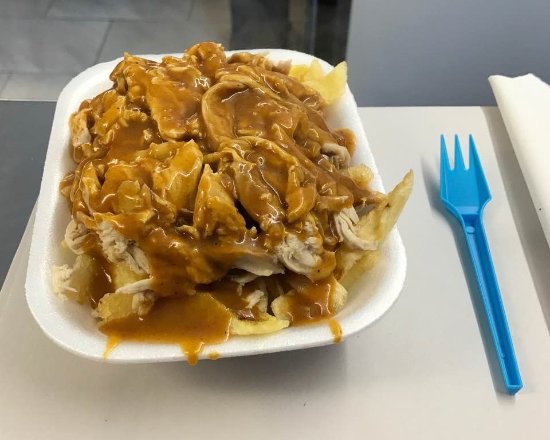
Curry flavours became so familiar that they began escaping the curry house altogether.
They moved onto chips. Into pies. Across pub menus. Onto street-food stalls.
And eventually into that wonderful culinary territory where nobody is entirely sure which tradition owns the dish anymore.
***
From curry house to street food
Today, the Indian food available in Wales bears little resemblance to the world of boxed Vesta meals.
Traditional restaurants remain, but alongside them have come regional Indian cooking, modern street food, vegetarian and vegan menus, dosas, chaats, grilled dishes, biryanis and increasingly ambitious interpretations of food from across the Indian subcontinent.
That distinction matters.
There is no single thing called “Indian food” any more than there is one single Welsh dish.
India contains enormous regional variation in ingredients, cooking traditions and flavours.
What Wales originally encountered through curry houses represented only part of that enormous culinary culture.
Now the picture is becoming considerably richer.
***
And then Wales does what Wales does…
It adapts things.
That is how we end up with Welsh lamb in an Indian-style curry.
Or curry sauce on chips.
Or a television character from Gavin & Stacey becoming immortalised through three bhunas and nine poppadoms.
Or generations of Cardiffians regarding chicken curry off the bone as an essential part of a night in the city centre.
None of that replaces authentic Indian cuisine. It simply demonstrates what happens when food travels. It gets remembered. It gets adapted.
It becomes associated with places, families, television programmes and nights out.
Eventually it becomes part of local culture.
***
From Mumbai to… Mumbles?
Perhaps one day.
We have already discovered through our Wales and India stories that the relationship between the two countries involves everything from cricket and hockey to Bollywood, universities, healthcare and business.
Food may be the most familiar connection of all.
Most people in Wales will never have attended a trade mission to India.
Rather more have probably ordered a curry.
And that might be why the culinary connection is worth celebrating.
From Vesta boxes to sophisticated Indian restaurants, from Smithy’s bhunas to Chippy Lane chicken curry, Indian flavours have travelled an extraordinary distance.
They have also found a very comfortable home in Wales.
***
Did Ewe Know?
Smithy’s Gavin & Stacey order became so famous that Meghna Balti Express in Cardiff actually put a “Smithy” meal on its menu, offering the bhunas, rice, chips, naan, poppadoms and saag aloo as a complete takeaway order.