
A History of Wales: From Ancient Kingdoms to the Modern Day
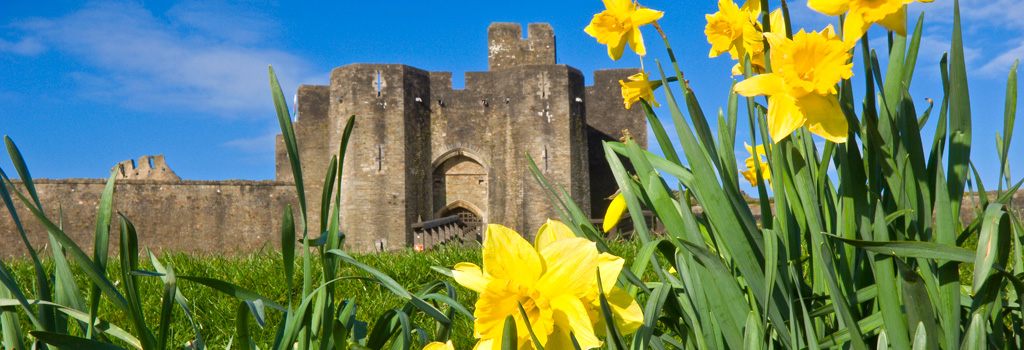
THE story of Wales stretches back thousands of years.
It is a history of ancient peoples and Roman soldiers, powerful Welsh kingdoms and medieval princes, castles and rebellion, poets and preachers, coal miners and industrial pioneers.
It is also the story of a language and culture that survived enormous political, economic and social change.
From prehistoric monuments to the modern Senedd, the landscape of Wales is filled with reminders of what came before.
Here is the story of Wales — or at least a place to begin.
Before Wales
People were living in the land we now call Wales thousands of years before Wales existed as a country.
Evidence of prehistoric communities survives across the landscape in burial chambers, hillforts, standing stones and settlements.
Sites such as Pentre Ifan in Pembrokeshire and Bryn Celli Ddu on Anglesey provide remarkable links with communities who lived here thousands of years ago.
Long before written histories, generations were farming the land, trading, building monuments and developing societies of their own.
The arrival of Rome would change everything.
***
Roman Wales
The Roman conquest of the area that became Wales began around AD 47 and was fiercely resisted by some of the native peoples.
Among the best remembered were the Silures of south-east Wales and the Ordovices further north.
Roman military bases were established across the country, including the great legionary fortress at Caerleon, while roads, forts, settlements and industries developed under Roman rule.
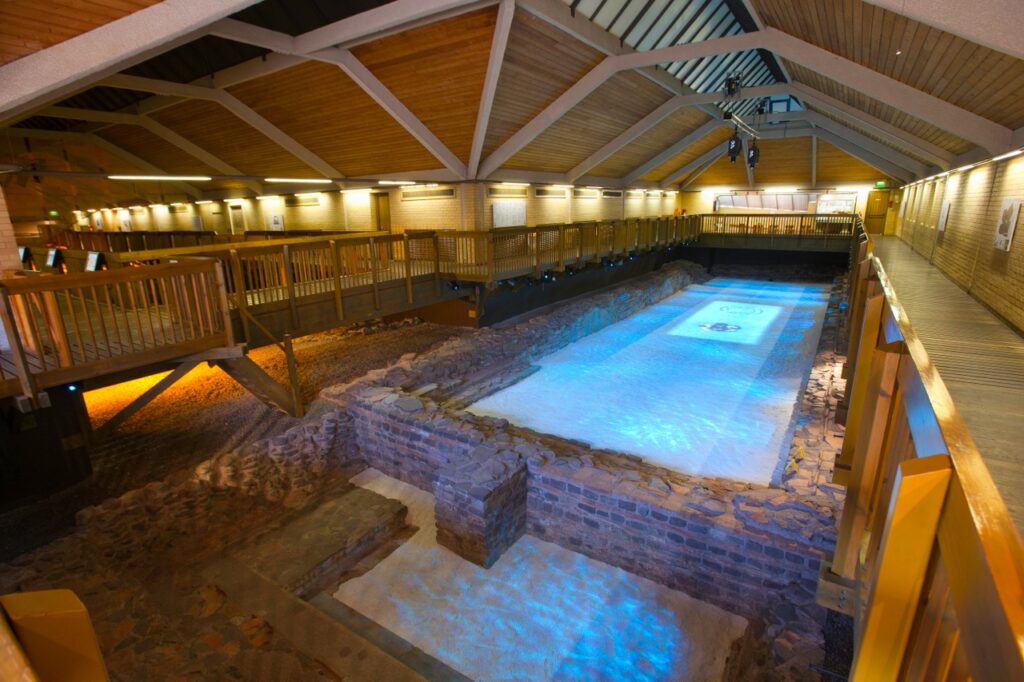
At Caerwent, the remains of the Roman town of Venta Silurum can still be explored. At Segontium, overlooking modern Caernarfon, visitors can walk among the remains of another important Roman fort.
Roman occupation of Wales lasted for more than three centuries, ending early in the fifth century.
What followed was not the sudden creation of Wales, but the emergence of a patchwork of kingdoms.
***
The Age of the Welsh Kingdoms
After Roman rule ended, kingdoms including Gwynedd, Powys, Deheubarth and Gwent emerged.
Their rulers competed, cooperated, fought and occasionally succeeded in exercising influence far beyond their own territories.
Among the most important early rulers was Hywel Dda — Hywel the Good.
Living during the tenth century, Hywel is traditionally associated with the organisation and codification of Welsh law. The Welsh legal tradition that bears his name became one of the most significant achievements of medieval Wales.
Wales remained politically fragmented, but its kingdoms shared important elements of language, culture and law.
The arrival of the Normans following their conquest of England in 1066 brought a new challenge.
***
Normans, Castles and the Welsh Princes
Norman lords gradually established control over substantial areas of Wales, particularly along the borders and in the south.
They built castles and created powerful Marcher lordships, but complete conquest proved much harder.
Welsh rulers continued to control large territories.
During the 12th and 13th centuries, the kingdom of Gwynedd became particularly powerful.
Llywelyn ap Iorwerth, better known as Llywelyn the Great, established himself as the dominant Welsh ruler of his generation.
Later in the century his grandson Llywelyn ap Gruffudd achieved recognition by the English Crown as Prince of Wales.
But confrontation with England’s Edward I proved disastrous.
Llywelyn was killed in 1282, and the conquest of independent Welsh rule followed. Edward constructed or expanded a formidable network of castles, including those at Caernarfon, Conwy, Harlech and Beaumaris.
The age of the independent Welsh princes appeared to be over.
It wasn’t quite the end of the story.
***
Owain Glyndŵr and the Great Rebellion
More than a century later, Owain Glyndŵr launched the greatest Welsh rebellion of the medieval period.
On 16 September 1400, Glyndŵr was proclaimed Prince of Wales.
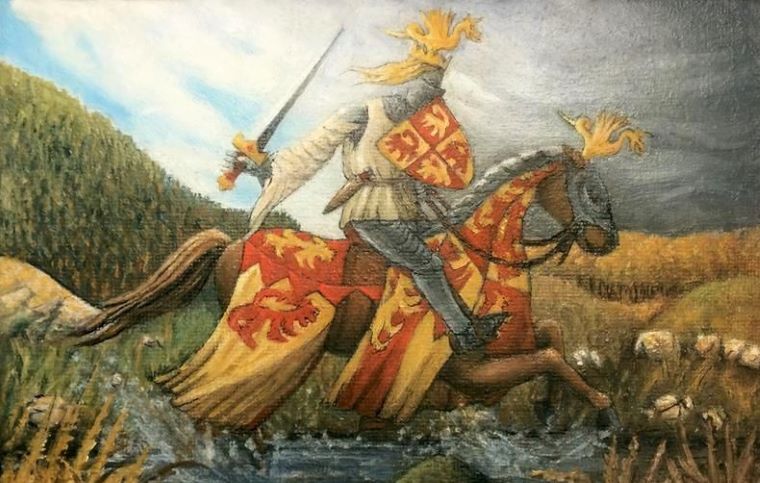
What began amid a dispute involving neighbouring Marcher lord Reginald Grey developed into a widespread revolt against the rule of Henry IV.
Glyndŵr’s forces captured important strongholds including Harlech and Aberystwyth, won significant military victories and attracted support from overseas.
In 1404, representatives from across Wales gathered at Machynlleth, where Glyndŵr held a parliament. His ambitions included an independent Welsh state, church and universities.
Eventually the rebellion declined.
But Glyndŵr himself was never captured.
His final years and burial place remain uncertain, helping transform the historical prince into one of the great legendary figures of Wales.
Explore the full story of Owain Glyndŵr →
***
Wales and the Tudors
One of the great twists in Welsh history came less than a century later.
A dynasty with Welsh origins gained the English throne.
Henry Tudor, born at Pembroke Castle, defeated Richard III at the Battle of Bosworth in 1485 and became Henry VII.
His son, Henry VIII, presided over another fundamental transformation.
The Laws in Wales Acts of 1535 and 1542 integrated Wales more completely within the English legal and administrative system. English law was extended throughout Wales, Wales was represented in Parliament and English became the language of official legal administration.
Politically, Wales and England were now more closely integrated than ever.
Yet Welsh language and culture survived.
***
Faith, Language and Culture
Religion played a major role in shaping early modern Wales.
One particularly important milestone came in 1588, when William Morgan’s Welsh translation of the Bible was published.
Its importance extended far beyond religion. The translation helped establish a standard literary form of Welsh and placed the Welsh language at the heart of religious and cultural life.
Over succeeding centuries, Nonconformist chapels became central features of many Welsh communities.
Poetry, music and the eisteddfod tradition also played important roles in maintaining and reinventing Welsh cultural identity.

One of the most fascinating characters in this story was Iolo Morganwg — poet, antiquarian, stonemason, cultural visionary and prolific literary forger.
Much of what people came to regard as ancient Welsh tradition was shaped, revived — and sometimes invented — by him.
Discover the extraordinary story of Iolo Morganwg →
***
Wales Becomes an Industrial Nation
Few periods transformed Wales as dramatically as the Industrial Revolution.
Coal, iron, copper, slate and later steel changed both the landscape and the population.
Small settlements became major industrial towns.
Merthyr Tydfil became one of the world’s great iron-producing centres. The south Wales valleys filled with collieries and mining communities. Swansea became internationally important for copper smelting.
In north-west Wales, enormous slate quarries supplied roofing material far beyond Wales. By the 1870s, Dinorwig Quarry alone employed more than 3,000 men.
And coal became king.
At its peak in 1913, the Welsh coalfields produced almost 61 million tonnes of coal. Welsh coal was exported around the world, while ports including Cardiff and Barry expanded dramatically to handle the trade.
Industrialisation created enormous wealth.
It also brought dangerous working conditions, industrial disputes, poverty and terrible disasters.
Mining communities developed distinctive cultures built around work, chapel, sport, music, trade unionism and close community ties.
Discover the story of Coal & Industrial Wales →
***
Protest and Political Change
Industrial Wales also became a place of political and social protest.
The Merthyr Rising of 1831, associated forever with the name of Dic Penderyn, reflected severe economic hardship and demands for change.
The Rebecca Riots of the 1830s and 1840s saw protesters attack toll gates in rural west and mid Wales.
The Chartist movement attracted considerable support, culminating dramatically in the Newport Rising of 1839, when thousands marched on the town.
As the 19th century continued, Wales developed increasingly distinctive religious, cultural and political institutions.
The creation of the University of Wales, the National Library and National Museum helped build a growing sense of national institutional life.
***
Wales at War
Like communities throughout Britain, Wales paid a heavy price during the First World War.
Thousands of Welshmen served and died, while industry at home contributed to the war effort.
The Second World War brought further losses, bombing of Welsh towns and cities and major social change.
Welsh ports and industrial centres were strategically important, making them targets for German air raids.
Cardiff and Swansea were among the places badly affected.
The post-war decades then brought transformations of a very different kind.
***
The Decline of Heavy Industry
Industries that had shaped Wales for generations began to decline during the 20th century.
Coal mining contracted sharply.
Iron and steel employment changed.
Many communities built around a single industry faced enormous economic and social disruption.
The Aberfan disaster of 1966, in which 116 children and 28 adults were killed after a colliery spoil tip collapsed onto the village, became one of the darkest days in modern Welsh history.
By the end of the century, most of the deep coal mines that had once dominated the south Wales valleys had closed.
Yet their influence on Welsh communities, culture and landscape remains profound.
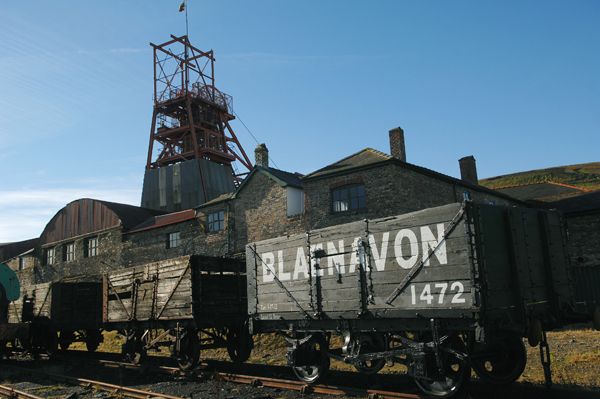
Former industrial sites including Big Pit at Blaenavon and the slate landscapes of north-west Wales now help tell that history to new generations.
***
The Welsh Language
The survival and status of the Welsh language — Cymraeg — forms another important thread running throughout the country’s history.
Despite centuries of political and social pressure, Welsh continued to be spoken, written and sung.
Campaigns during the 20th century sought greater recognition for the language in education, broadcasting and public life.
The Welsh Language Act 1967 expanded its official use, while later legislation strengthened its position further.
Today Welsh remains one of the great living connections between modern Wales and its past.
***
Devolution and Modern Wales
During the second half of the 20th century, debate grew over whether more political decisions affecting Wales should be made in Wales.
A referendum on devolution was heavily defeated in 1979.
A second referendum on 18 September 1997 produced a very different result. The proposal to establish a Welsh Assembly was approved by a narrow majority of just 6,721 votes.
The first National Assembly for Wales was elected in 1999.
Its responsibilities and law-making powers increased over subsequent years. A further referendum in 2011 approved expanded primary law-making powers in devolved areas.
In 2020, the institution formally became Senedd Cymru / Welsh Parliament, reflecting its development into a national legislature.
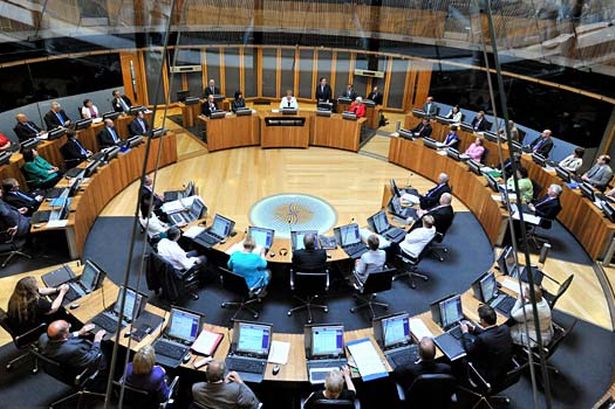
It represents another chapter in a very long story of how Wales has been governed.
The Story Continues…
Welsh history cannot be reduced to a procession of princes, kings and politicians.
It belongs equally to the quarryman at Dinorwig, the miner in the Rhondda, the dock worker in Cardiff, the farmer in Ceredigion, the copper worker in Swansea, the poet competing at an eisteddfod and the families whose stories crossed generations.
Its evidence is everywhere.
It survives in ruined castles and abandoned collieries, medieval manuscripts and chapel graveyards, industrial terraces, ancient place names, songs, stories and the Welsh language itself.
And there is still much more to discover.
Across Ewegottalove’s Welsh History & Heritage section, we will be exploring the people, places, industries, battles, legends and everyday lives that together tell the remarkable story of Wales.
Did Ewe Know?
By 1850, more people in Wales were employed in industry than in agriculture — a transformation that Museum Wales describes as making Wales the world’s first industrial nation.