
Where Nostalgia, Playground Fun and Swapsies meet a Cut-throat World of Commerce
THERE was a time when collecting cards meant pocket money, swapping doubles with your friends and desperately searching for the one card needed to complete a set.
Nobody talked about portfolios.
Nobody sent a card away to be professionally graded.
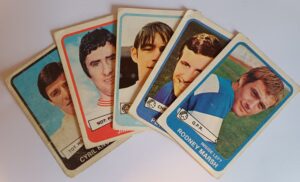
And very few children opening a packet wondered whether the piece of cardboard in their hand might one day be worth more than a house. It was simply a matter of “got”…”got”…”need” as youngsters offered up their doubles to swap with friends in the playground.
Then something changed.
Football cards, baseball cards and cigarette cards had been collected for generations, but the arrival of Pokémon, followed by internet auctions, professional grading, YouTube pack openings and livestream selling, helped transform an old-fashioned hobby into a global collectibles business.
In February 2026, a single Pokémon card sold at auction for $16.492 million – around £12.1 million.
So when did collecting stop being just a hobby – and are children now being priced out of something that was largely created for them?
YOUGOTTALOVE’S GUIDE TO THE EXTRAORDINARY MODERN TRADING-CARD BOOM
HOW DID CARD COLLECTING BEGIN?
Long before Pikachu or Premier League inserts, cards were already being collected.
In Britain, cigarette manufacturers included illustrated cards in packets featuring everything from footballers and cricketers to aircraft, wildlife and famous personalities.
Children and adults began building sets and swapping duplicates.
Football cards and stickers, often accompanied in their packets by a stick of bubble gum, eventually became a playground institution.
The pleasure was often extremely simple: open the packet, discover who you had and try to complete the collection.
Today, some of those supposedly disposable early cards are highly prized antiques.
A rare card featuring Welsh football pioneer Billy Meredith, for example, sold at auction for £5,600.
But even Meredith might struggle to comprehend what happened next.
HOW DID POKÉMON CHANGE CARD COLLECTING?
Pokémon began in Japan in the 1990s before becoming an international phenomenon encompassing video games, television, toys, films and trading cards.
The cards reached English-speaking markets towards the end of that decade.
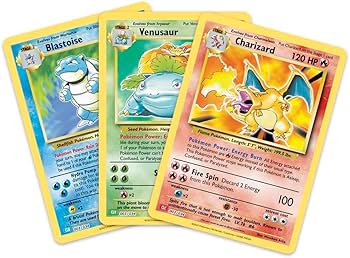
For children, the concept was perfect.
Buy a relatively inexpensive packet, collect favourite Pokémon, swap cards and – if you wished – actually use them to play the Pokémon Trading Card Game.
Then the children who grew up with Pokémon became adults.
Many now had something they hadn’t possessed in the school playground:
disposable income.
Nostalgia collided with scarcity.
First-edition cards, rare artwork and childhood favourites such as Charizard and Pikachu suddenly became desirable to adults who were prepared to spend serious money rebuilding – or improving – the collections they remembered from childhood.
Pokémon says tens of billions of cards have now been produced, yet particularly desirable new releases can still disappear almost immediately. Recent shortages have led retailers to introduce purchasing limits as collectors and resellers compete for stock.
WHAT IS THE MOST EXPENSIVE POKÉMON CARD EVER SOLD?
The numbers have become extraordinary.
In February 2026, a Pikachu Illustrator card graded PSA 10 was sold through Goldin Auctions for $16.492 million – approximately £12.1 million.
It became the most expensive trading card of any kind ever sold at auction.
This particular example was even more remarkable because it is the only known Pikachu Illustrator to receive PSA’s highest Gem Mint 10 grade.
Twelve million pounds.
For one Pokémon card.
Those playground swaps suddenly look rather different.
WHAT DOES ‘GRADING’ A CARD ACTUALLY MEAN?
Grading has become one of the defining features of modern collecting.
Companies such as PSA – Professional Sports Authenticator – examine a card, authenticate it and assess its condition.
Cards are judged on factors including corners, edges, surface condition and how well the image is centred.
PSA uses a scale running from 1 to 10.
A PSA 10 is Gem Mint – essentially the dream result for a collector.
Once graded, the card is sealed inside a tamper-evident protective holder carrying its grade and certification details.
PSA says it has authenticated and graded more than 65 million items since being founded in 1991.
A tiny crease or imperfect corner can therefore create a surprisingly large difference in value.
In today’s collecting world, apparently even cardboard can have a CV.
ARE CHILDREN BEING PRICED OUT OF POKÉMON?
This is where the story becomes less comfortable.
Pokémon cards are still designed to be collected and played with by younger fans, but high demand has attracted adult collectors, investors, resellers and so-called scalpers.
Some sought-after releases disappear almost as soon as they reach shops.
Retailers have responded by restricting how many packets or boxes one customer can buy, while some online releases use invitation or lottery-style purchasing systems.
UK card-shop owners have reported adults queuing before opening time and buying desirable stock specifically for resale.
The result is an uncomfortable irony:
a children’s card game can sometimes be hardest for children themselves to buy.
The Guardian reported families struggling to find new Pokémon packs while resellers bought stock to sell at inflated prices, with one retailer saying the hobby had started to resemble a speculative market.
Retailers have also spoken about deliberately holding stock back for families and younger customers to give them a fair chance of buying cards at normal retail prices.
WHAT DO YOUTUBE AND TIKTOK HAVE TO DO WITH IT?
Quite a lot.
Card collecting used to be something you did privately.
Now millions can watch somebody else open a packet.
YouTube, TikTok and other social platforms are filled with creators opening boxes of Pokémon, football, basketball and other cards while displaying estimated values on screen.
The big moment comes when somebody pulls a rare card.
The reaction can be enormous.
And that creates compelling video.
The problem is that viewers generally see the spectacular successes rather than the hundreds or thousands of ordinary cards opened along the way.
Some parents and specialist retailers have expressed concern that younger collectors can come away believing opening packs is an easy route to discovering something worth hundreds of pounds.
The old question was:
“Which card did I get?”
Increasingly it has become:
“How much is it worth?”
WHAT IS A CARD BREAK?
This is one of the stranger developments for anyone returning to collecting after several decades away.
A seller – usually known as a breaker – opens boxes or cases of cards live online.
Instead of buying the entire box, viewers buy a team, player, division or other allocated “spot”.
The packs are then opened live.
If cards matching your allocated spot appear, you receive them.
If they don’t, you may receive very little.
eBay now operates its own live card-breaking service, describing breaks as live events where buyers purchase slots and watch boxes being opened in real time.
It turns opening trading cards into a mixture of collecting, shopping and entertainment.
WHY ARE PEOPLE SELLING CARDS LIVE ON THE INTERNET?
Because audiences apparently enjoy watching shopping happen.
Platforms including eBay Live now allow sellers to present collectibles in real time while viewers comment, bid and buy.
eBay specifically lists sports cards, collectible toys and comics among the categories available through its live-selling service.
This means the card shop counter has effectively become a global television studio.
A collector in Cardiff can watch somebody in America open a football-card box, bid on a Japanese Pokémon card and discuss a purchase with collectors scattered around the world – all without leaving the sofa.
WHY DO SOME PEOPLE KEEP BOXES SEALED?
Because opening the cards is no longer always the point.
Collectors sometimes buy unopened booster boxes, packets and special sets and simply store them.
Why?
Because if the product becomes scarce, an unopened box containing the possibility of rare cards can itself become valuable.
It creates a wonderfully strange collecting paradox.
The cards inside might be disappointing.
But as long as nobody opens the box, nobody knows.
Schrödinger’s Charizard, perhaps.
IS CARD COLLECTING NOW AN INVESTMENT?
For some people, undoubtedly.

Collectors track prices, population reports and previous auction results. Apps can display collections almost like financial portfolios.
Rare cards can appreciate substantially.
But prices can also fall.
Today’s must-have set can become tomorrow’s ordinary release, and an eye-catching asking price on an auction website does not mean anybody will actually pay it.
That is why serious collectors tend to look at confirmed sold prices, scarcity and grading populations rather than optimistic listings.
There is also a basic rule worth remembering:
something being collectible does not automatically make it a good investment.
For many people, the greatest value of a card remains the memory attached to it.
ARE FAKE TRADING CARDS A PROBLEM?
Yes.
Wherever large sums of money appear, counterfeits tend to follow.
Pokémon cards, vintage sports cards and supposedly rare modern cards can all be faked.
Packets can also potentially be opened, valuable cards removed and the packaging resealed.
Professional authentication has partly grown because buyers want reassurance that a valuable card is genuine.
For expensive purchases, provenance, reputable sellers and recognised authentication therefore matter considerably more than they did when two schoolchildren were swapping cards across a playground table.
WHAT SHOULD YOU DO IF YOU FIND AN OLD COLLECTION?
First: don’t throw it away.
Second: don’t immediately assume you have discovered your retirement fund.
Identify the exact card, manufacturer, year and set.
Look at its condition carefully.
Search for actual sold results, not simply asking prices.
Avoid cleaning, trimming or attempting to repair valuable-looking cards.
And if something genuinely appears rare, seek specialist advice before spending money on grading.
Sometimes the battered card you remember from childhood really is worth only 50p.
Sometimes it isn’t.
HAS ALL THE MONEY TAKEN THE FUN OUT OF COLLECTING?
Perhaps that depends on the collector.
There remains something wonderfully simple about opening a packet and finding a favourite player or character.
Children still swap cards.
Football supporters still collect their heroes.
Pokémon players still build decks because they actually want to play the game.
And plenty of adults collect simply because it reconnects them with something they loved when they were younger.
But there is no denying that another world now exists alongside that innocent hobby.
It contains professional graders, investment portfolios, livestream auctions, resellers, influencers and cards worth millions.
The piece of cardboard hasn’t fundamentally changed.
Everything around it has.
Want a Welsh example of just how surprising card values can become?
Ewegottalove has also looked at Billy Meredith, Ryan Giggs, Gareth Bale and other Welsh footballers whose trading cards range from pocket-money collectibles to items worth thousands of pounds.
READ: From Billy Meredith to Gareth Bale – could your old Welsh football cards be worth a fortune?
DID EWE KNOW?
The record-breaking £12 million Pikachu Illustrator was originally produced not as something people could buy in a shop, but as a prize for winners of an illustration competition in Japan.
A card created as a reward for drawing Pokémon ended up becoming the most expensive trading card ever sold.
Perhaps the strangest transformation in the trading-card world is not what happened to the cards at all – but what happened to us collectors.