Calan Gaeaf: Wales’ Forgotten Halloween of Ghosts, Bonfires and Frightful Folklore
LONG before pumpkins, trick-or-treating and supermarket skeletons became part of late October, Wales had its own eerie way of marking the turning of the year.
That festival was Calan Gaeaf, the traditional first day of winter, celebrated on the eve of 1 November. It was a night of bonfires, strange rituals, ghostly warnings and old beliefs that suggested the boundary between the living and the otherworldly was at its thinnest.
Today, Halloween in Wales often looks much the same as Halloween anywhere else, with fancy dress, horror films and children knocking on doors in search of sweets. Yet behind the modern celebrations lies a much older Welsh story — one filled with superstition, folklore and a powerful sense that winter was arriving with more than just cold weather in tow.
In the old Welsh calendar, Calan Gaeaf marked the beginning of the darker half of the year. It was a liminal time, a moment of transition when the safety and brightness of summer had passed and the long nights of winter stretched ahead. That sense of change gave the evening a mysterious and sometimes unsettling quality.
Bonfires were often central to the occasion. Families and neighbours would gather around flames on hillsides or in village spaces, both for warmth and ceremony. In some traditions, stones were marked and cast into the fire. The following morning, those present would search the ashes to see whether their stone remained. If it had disappeared, it was said to be a warning that death or misfortune might visit before the next Calan Gaeaf. It was an unsettling custom, but one that reveals how seriously people once regarded such seasonal turning points.
Divination also played a role. Like other autumn festivals across Britain and Ireland, Calan Gaeaf was thought to be a time when the future could be glimpsed. Young people might perform simple rites in the hope of discovering whom they would marry, while others looked for omens in the fire, the wind or the behaviour of animals. It was a season rich in signs and meanings.
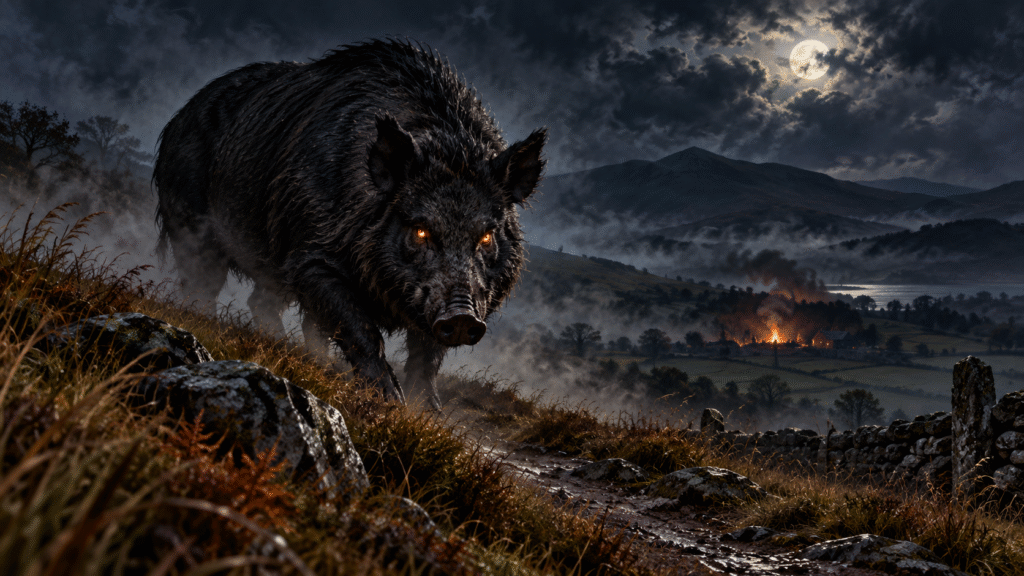
Among the most memorable figures associated with Welsh Halloween is Yr Hwch Ddu Gwta, often translated as the tailless black sow. In folklore, this fearsome creature haunted the night of Calan Gaeaf, especially to terrify children who lingered too long after dark. After games and gatherings came to an end, youngsters were warned to hurry home before the beast appeared. The image is wonderfully strange and distinctly Welsh — part cautionary tale, part supernatural threat, and exactly the sort of character that deserves a place alongside more familiar Halloween witches and ghosts.
Wales also possesses a long tradition of ghostly belief that fits naturally with Calan Gaeaf. There are tales of spectral ladies, uncanny apparitions and the eerie cannwyll corff, or corpse candle — mysterious lights said to foretell a death. In parts of Wales, such flickering lights were believed to travel the route of a future funeral, serving as a warning to those who saw them. Whether understood as superstition, folklore or something more mysterious, such stories remind us that older generations often viewed the landscape through a deeply supernatural lens.
Then there are the Cŵn Annwn, the hounds of the otherworld, whose howling has long echoed through Welsh myth. Closely associated with Arawn, ruler of Annwn, these spectral dogs are among the most famous eerie presences in Welsh tradition. Though not exclusive to Calan Gaeaf, they belong to the same imaginative world: one in which the boundaries between this world and the next could shift alarmingly on a dark autumn night.
What makes Calan Gaeaf especially interesting is that it was not simply about fear. Like so many traditional festivals, it brought people together. There was companionship around the fire, shared customs, games, food and stories handed down through generations. It was a communal way of acknowledging the changing season and facing winter with both caution and celebration.
In modern Wales, there is growing interest in rediscovering these older customs. As people look for local identity and tradition in a world of increasingly global celebrations, Calan Gaeaf offers something rich and distinctive. It reminds us that Wales did not merely borrow Halloween from elsewhere. It had its own version — older, darker, stranger and rooted in the landscapes and beliefs of Welsh communities.
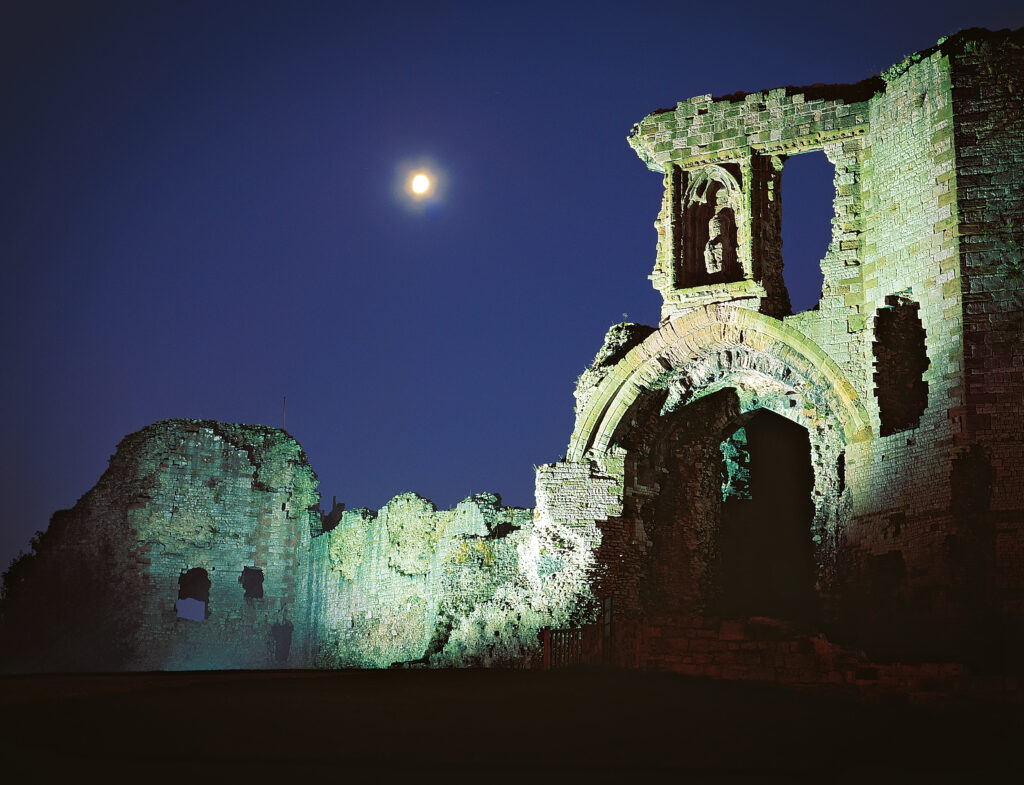
That makes it a perfect theme for autumn events, museum activities, storytelling sessions and heritage features. It also gives families a chance to explore a side of Halloween that goes beyond shop-bought costumes and plastic decorations. A walk through an ancient churchyard, a visit to a castle with ghost stories attached, an evening around a fire, or simply the retelling of old Welsh tales can all become part of a more home-grown seasonal celebration.
So while modern Halloween may still bring pumpkins and sweets, Calan Gaeaf invites us to look deeper into Wales’ own past — towards crackling bonfires, whispers of omens, ghostly lights in the darkness and the terrifying possibility of Yr Hwch Ddu Gwta waiting beyond the gate.
If you are looking for ways to enjoy the season, Ewegottalove’s Halloween in Wales guides highlight family events, haunted attractions, spooky stories, pumpkin picking and autumn activities across the country. But behind all the fun lies an older Welsh tradition that deserves to be remembered.
DID EWE KNOW? In Montgomeryshire, an old Calan Gaeaf custom involved preparing a special mash of nine ingredients, including potatoes, carrots, turnips, peas, parsnips and leeks. A wedding ring was hidden in the mixture, and whoever discovered it in their portion was believed to be next to marry! It was an early Welsh version of finding a lucky charm in a Christmas pudding — although perhaps rather less appetising!