
Owain Glyndŵr: Prince of Wales, Rebel and the Man Who Changed Welsh History
MORE than six centuries after his great rebellion began, Owain Glyndŵr remains one of the most compelling figures in the history of Wales.
Warrior, landowner, diplomat and self-declared Prince of Wales, Glyndŵr led an uprising that came remarkably close to transforming the political future of the country. He captured great castles, established a Welsh parliament, negotiated with foreign powers and set out an extraordinary vision for a Wales with its own government, church and universities.
Then, almost as dramatically as he had appeared, he vanished.
He was never captured. His final resting place remains unknown.
It is a story containing war, politics, family tragedy, international intrigue and enduring mystery — and one which continues to fascinate Wales more than 600 years later.
Who was Owain Glyndŵr?
The precise year of Glyndŵr’s birth is uncertain, although historians generally place it in the middle of the 14th Century. The Dictionary of Welsh Biography gives around 1354, while other modern Welsh heritage sources use approximately 1359. What is much clearer is that he came from important Welsh families.
His father, Gruffydd Fychan II, descended from the princes of Powys, while through his mother, Helen, Owain also had connections with the royal dynasty of Deheubarth. These bloodlines would later help give legitimacy to his claim to Welsh leadership.
His early life was very different from the romantic image of a rebel hiding among the Welsh mountains.
Glyndŵr spent time in London, was associated with the Inns of Court and acquired experience as a soldier. He even served the English Crown on military campaigns during the 1380s. He married Margaret Hanmer, the daughter of Sir David Hanmer, and lived the life of a prosperous Welsh landowner, with homes including Sycharth and Glyndyfrdwy.
Nothing made rebellion inevitable.
But Wales was about to enter a turbulent period.
***
Why did Owain Glyndŵr rebel?
The immediate spark involved a dispute between Glyndŵr and his powerful neighbour Reginald Grey, Lord of Ruthin, concerning land.
Behind that personal argument, however, lay much wider tensions.
England’s King Richard II had been deposed in 1399 and replaced by Henry Bolingbroke, who became Henry IV. Within Wales there was dissatisfaction over political, economic and social restrictions imposed following the English conquest of the previous century.
Glyndŵr’s personal grievance therefore became the spark for something much bigger.
On 16 September 1400, Glyndŵr’s supporters proclaimed him Prince of Wales at Glyndyfrdwy. He and his followers subsequently attacked Ruthin, and disturbances spread.
What might initially have appeared to be a local revolt became a national uprising.
That date — 16 September — is now commemorated annually as Owain Glyndŵr Day.
***
How successful was the Glyndŵr rebellion?
Much more successful than might be imagined from its eventual failure.
Glyndŵr proved capable of attracting support across substantial areas of Wales. In 1402, his forces achieved an important victory at the Battle of Bryn Glas near Pilleth and captured the English commander Edmund Mortimer.
Mortimer subsequently allied himself with Glyndŵr and married his daughter Catrin.
The rebellion also became entangled with opposition to Henry IV within England itself. Glyndŵr formed relationships with members of the powerful Percy family, while seeking support internationally from Scotland, Ireland and, most importantly, France.
By 1404, Glyndŵr’s position was extraordinarily strong.
His forces captured Aberystwyth Castle and Harlech Castle, giving him control over strategically important strongholds in west Wales. Harlech became his headquarters and family residence.
For a period, the prospect of a substantially independent Welsh state was no longer merely an impossible dream.
***
Did Owain Glyndŵr create a Welsh parliament?
This is one of the most important aspects of his story.
In 1404, representatives from across Wales gathered at Machynlleth, where Glyndŵr held a parliament and was recognised as Prince of Wales by his supporters.
His ambitions went well beyond simply defeating an English army.
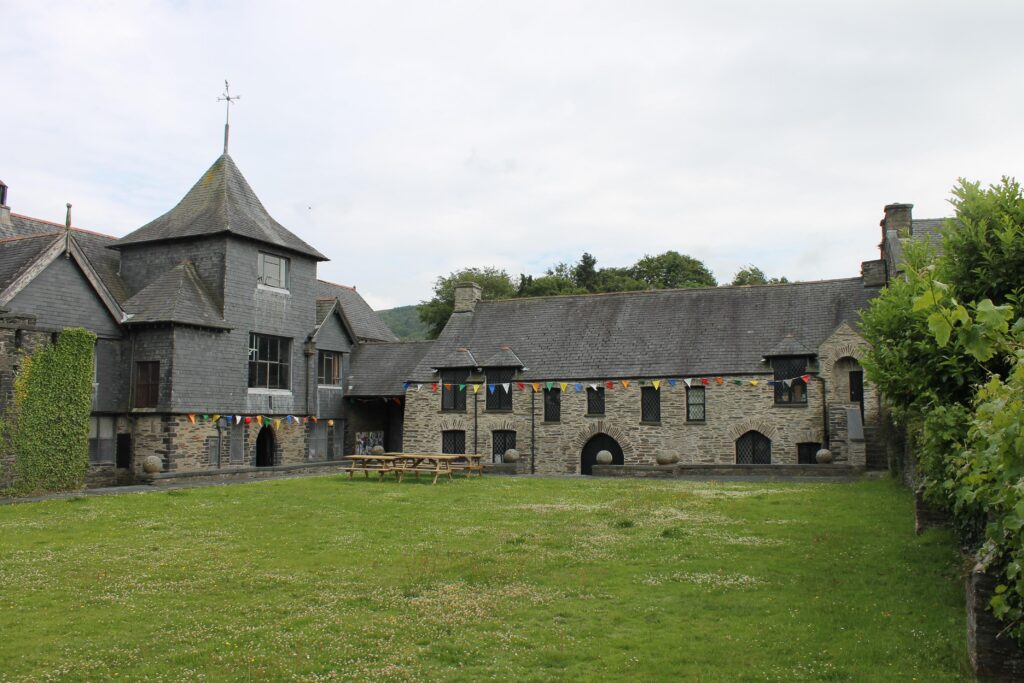
Glyndŵr envisioned a country with its own political institutions. His programme included a Welsh parliament, an independent Welsh church and universities within Wales. Cadw describes the gathering at Machynlleth as involving representatives from across the country, with foreign delegates also invited.
This is one reason Glyndŵr’s story has retained such importance.
The rebellion was not simply a succession of medieval battles. Behind it developed a political vision of how Wales might govern itself.
***
What was the Pennal Letter?
One remarkable document allows us to glimpse that vision.
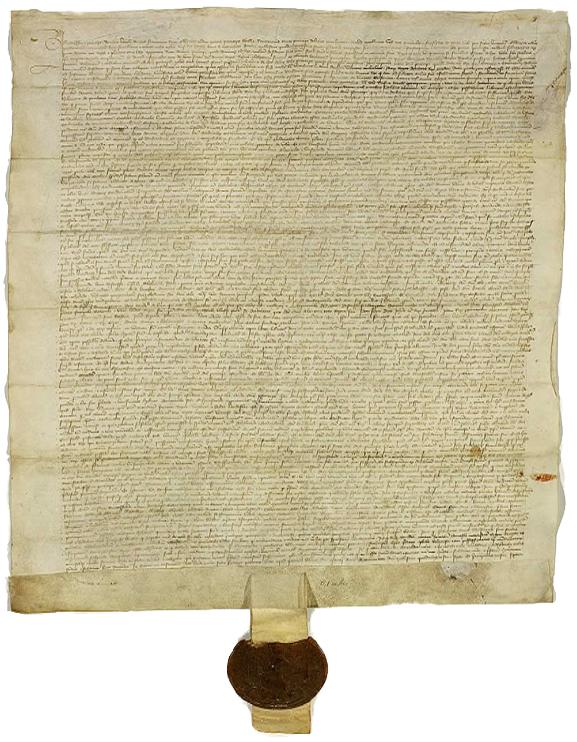
On 31 March 1406, Glyndŵr sent what has become known as the Pennal Letter to King Charles VI of France.
Written during a church synod at Pennal, the letter sought French support while outlining elements of Glyndŵr’s plans for Wales.
Among those ambitions were an independent Welsh church and two universities, one in north Wales and another in the south.
The original Pennal Letter survives today in the Archives Nationales in Paris, while facsimiles have been produced by the National Library of Wales.
It is an extraordinary survival — a physical connection with Glyndŵr himself and with the Wales he hoped to create.
***
What happened at Harlech?
Harlech Castle became one of the great centres of Glyndŵr’s rebellion after falling to his forces in 1404.
He established his court there and lived in the castle with his family. Another parliament was held at Harlech, while the fortress became a symbol of the rebellion at its height.
But momentum was beginning to turn.
Foreign assistance diminished, the English Crown changed its tactics and Glyndŵr’s forces suffered defeats.
Aberystwyth eventually fell back into English hands, and in 1409 Harlech Castle was recaptured after a long siege.
Glyndŵr escaped.
Members of his family were less fortunate. His wife and daughters were taken prisoner, and some would die in English captivity.
The great conventional phase of the rebellion was effectively over.
But Glyndŵr himself was still free.
***
Was Owain Glyndŵr ever captured?
No.
And this is where history begins to merge with mystery.
Glyndŵr continued resistance after the loss of his major strongholds and was still active as late as 1412. Yet despite attempts to find him and offers of pardon, he disappeared from the surviving historical record.
He was never delivered into the hands of the English Crown.
Later traditions place him in Herefordshire, possibly staying with members of his family. Some evidence suggests he may have died around 1415, although the exact date remains uncertain.
More tantalisingly, no confirmed grave has ever been discovered.
Traditions have attached his burial to several different locations, but none has been conclusively proved. Even relatively early sources acknowledge uncertainty about what happened to him.
For a man who had once commanded armies and negotiated with kings, Glyndŵr’s disappearance is remarkably complete.
***
Did the rebellion fail?
Militarily, yes.
Henry IV and later Henry V retained control, Glyndŵr’s government disappeared and Wales did not become the independent state he envisaged.
But that is only one way of measuring its importance.
For more than a decade the rebellion demonstrated that English control of Wales could be seriously challenged. Glyndŵr had created alliances, summoned parliaments, conducted diplomacy and governed territory in his own name.
His ideas about Welsh political, religious and educational institutions also survived the battlefield.
The Dictionary of Welsh Biography notes the importance of his plans for a national parliament, an independent Welsh church and international diplomacy when considering the larger ambitions behind the rebellion.
The revolt ended.
Glyndŵr’s reputation did not.
***
Why is Owain Glyndŵr still important today?
Perhaps partly because there has never been a neat ending to his story.
He was neither publicly defeated and executed nor captured and imprisoned. He simply disappeared beyond the reach of his enemies.
Over succeeding centuries, Glyndŵr became a powerful figure in Welsh historical memory.
His name can be found on streets, buildings, societies and monuments throughout Wales. His banner, displaying four lions, has become a familiar Welsh symbol.
There are particularly strong connections with Glyndyfrdwy, Corwen, Sycharth, Machynlleth, Harlech, Aberystwyth, Pennal and Pilleth, allowing modern visitors to follow the story through the Welsh landscape. Cadw itself promotes a historical trail linking sites associated with Glyndŵr and his uprising.
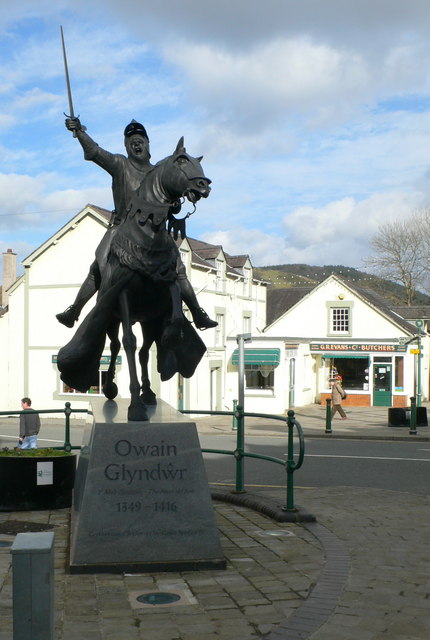
In Corwen, an imposing equestrian statue by sculptor Colin Spofforth depicts Glyndŵr riding into battle. It was unveiled in 2007, just a few miles from his lands at Glyndyfrdwy.
At Machynlleth, the Owain Glyndŵr Centre helps tell the story of the rebellion close to the place traditionally associated with his 1404 parliament.
And every 16 September, Owain Glyndŵr Day provides another opportunity to remember the man proclaimed Prince of Wales there more than six centuries ago.
***
Owain Glyndŵr in literature and popular culture
His legend also travelled far beyond Wales.
William Shakespeare included him — as Owen Glendower — in Henry IV, Part One. Shakespeare’s character is memorable, proud and mysterious, although inevitably the theatrical portrayal should not be confused with the historical Glyndŵr.
Books, poetry, television, theatre and art have continued to revisit his story.
Part of the attraction is obvious.
There is the respectable landowner who became a revolutionary; the Welsh prince who challenged a king; the military commander who became an international diplomat; and finally the wanted rebel who disappeared without leaving even a known grave.
Few historical lives provide quite so complete a story.
Except, of course, for the ending.
***
Where can you discover Owain Glyndŵr’s Wales?
The landscape remains one of the best ways to understand his story.
Glyndyfrdwy and Corwen take us back to his origins and the proclamation of 1400.
Pilleth recalls one of his greatest military victories.
Machynlleth represents his political ambitions.
Harlech evokes the rebellion at the height of its power.
Pennal represents his diplomacy and his vision for Wales’s future.
And the ruins of castles including Harlech and Aberystwyth provide physical reminders of how seriously Glyndŵr’s revolt once threatened the authority of the English Crown.
These are not simply places mentioned in an old story.
More than 600 years later, much of Glyndŵr’s Wales can still be explored.
***
The mystery remains
Owain Glyndŵr did not achieve the independent Wales for which he fought.
Yet remarkably, the king who wanted him captured never had the satisfaction of doing so.
No authenticated tomb marks Glyndŵr’s burial place. No final account explains with certainty how his extraordinary life ended.
Perhaps that is why the story still has such power.
History tells us that Owain Glyndŵr lived.
It tells us that he rebelled, fought, governed and dreamed of a different future for Wales.
But legend was allowed to write the final chapter.
Did Ewe Know?
You can quite literally walk through country associated with Glyndŵr today. Glyndŵr’s Way is a 135-mile (217km) National Trail through mid-Wales, running between Knighton, Machynlleth and Welshpool. Walking the complete route typically takes around nine days.