
Step Back in Time to the Middle Ages at Llantrisant Medieval Fayre This Weekend
KNIGHTS, archers and centuries of Welsh history return to one of south Wales’ oldest hilltop towns this weekend when Llantrisant Medieval Fayre takes over Castle Green.
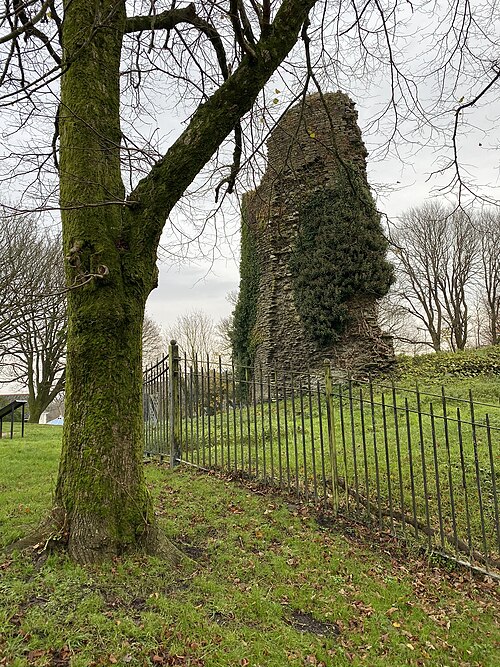
The free family event is being held beside Llantrisant’s historic Guildhall and the remains of its medieval castle.
Medieval Fayre. Photo: Alan Hughes / Geograph – CC BY-SA 2.0
For visitors, it promises an entertaining journey back into the Middle Ages.
For Llantrisant itself, however, the medieval setting is much more than make-believe.
When is Llantrisant Medieval Fayre 2026?
The fayre takes place on Llantrisant Castle Green, George Street, CF72 8EE on Saturday 19 and Sunday 20 September 2026, from 10am to 4pm on each day.
Admission is free.
As with all outdoor events, programmes and arrangements can change, so Ewegottalove recommends checking the Llantrisant Guildhall website before travelling.
***
What can visitors expect?
The Medieval Combat Society has Llantrisant Medieval Fayre listed on its official 2026 programme for the weekend, bringing living history back to Castle Green. The society specialises in historical displays involving medieval armour, combat and everyday life.
Previous Llantrisant fayres have transformed the green into a medieval encampment with battle demonstrations, archery, historic crafts and displays, while the setting itself provides much of the atmosphere.
And this is one event where the surroundings really matter.
The fayre does not take place in an anonymous field or modern events arena. Visitors are standing beside the remains of Llantrisant Castle and immediately outside a Guildhall whose origins stretch back to the medieval borough.
***
Why is Llantrisant such an appropriate setting?
Llantrisant has a history stretching back far beyond the Middle Ages, but the medieval period helped create the town visitors recognise today.
The castle was fortified in stone in 1246 under Richard de Clare, Earl of Gloucester and Lord of Glamorgan, becoming an important administrative centre controlling the surrounding territories of Meisgyn and Glynrhondda.
Only part of one tower survives today, but its commanding position above the surrounding countryside gives some idea of why Llantrisant was strategically important.
The medieval borough developed around the castle, and in 1346 Llantrisant received a charter granting important rights and privileges to its townspeople.
That same year would become particularly significant in the town’s story.
***
What connects Llantrisant with the Battle of Crécy?
The Guildhall’s heritage displays commemorate Llantrisant’s medieval longbowmen, traditionally known as the ‘Black Army‘, who fought for the Prince of Wales at the Battle of Crécy in 1346 during the Hundred Years’ War.
The bow became one of the defining weapons of medieval warfare, and Llantrisant continues to celebrate its connection with the Welsh archery tradition.
The Guildhall even has an Archer’s Hall, where its exhibition includes a life-sized representation of a medieval Welsh archer armed with a longbow.
That gives this weekend’s archery and combat displays rather more local meaning than they might have almost anywhere else.
***
What is Llantrisant Guildhall?
The Guildhall stands alongside Castle Green and has been at the heart of the town’s civic life for centuries.
An earlier Guildhall dates to the medieval borough, while the building was rebuilt in 1773. It served as the centre of local government, with its Court Room overseeing markets, fairs and local justice.
Among its treasures is a silver mace dating from 1633, while the building also tells the stories of Llantrisant’s Freemen, its archers and some of the colourful characters associated with the town.
Its location immediately alongside the castle ruins makes Castle Green one of those unusual places where several layers of Welsh history sit almost on top of one another.
***
Does Owain Glyndŵr enter the story?
Llantrisant Castle had already endured centuries of conflict by the beginning of the 15th Century.
Local tradition has long connected its final decline with Owain Glyndŵr’s revolt, and Rhondda Cynon Taf’s conservation history notes that it remains uncertain whether the castle was destroyed during Glyndŵr’s campaigns around 1404 or simply became redundant as political conditions changed.
There is therefore no firm documentary evidence that Glyndŵr personally destroyed Llantrisant Castle — but the possibility gives the town another fascinating connection with one of the most turbulent periods in Welsh history.
***
What else can visitors see in Llantrisant?
It is worth allowing some extra time rather than simply arriving for the fayre and leaving.
The old hilltop town retains its historic streets, independent shops and pubs, while the castle, Guildhall and parish church are all clustered close together.
The Guildhall recommends Swan Street Car Park, Caerlan Hall and Gwaun Ruperra Car Park off Heol y Sarn for visitors travelling by car. Disabled parking is available outside the Guildhall.
The Royal Mint Experience is also less than a mile away, giving visitors another substantial heritage attraction nearby.
***
Medieval history brought back to life
There is an important difference between reading about history and standing where some of it happened.
At Llantrisant this weekend, visitors can watch medieval re-enactors on a green overlooked by the remains of a genuine medieval castle, beside a Guildhall representing a borough whose history stretches back more than six centuries.
It makes the Medieval Fayre considerably more than fancy dress and clashing swords.
For Ewegottalove Wales, it also provides a timely reminder that the history of Wales is often still visible in the towns and communities around us — sometimes hiding almost in plain sight.
Did Ewe Know?
Llantrisant still preserves the extraordinary tradition of Beating the Bounds.
Historically used to ensure each generation remembered the boundaries of the ancient borough, the ceremony involves younger participants being held by their arms and legs and ceremonially bounced on the old boundary stones. The tradition has medieval roots and is still periodically observed in Llantrisant.