Explore Welsh Myths & Legends: Dragons, Heroes, Lost Kingdoms and Magic
FEW countries wear their legends quite as visibly as Wales.
They appear on the national flag, in the names of mountains and villages, beside lonely lakes, among ruined castles and in stories which have been told and retold for centuries.
Welsh mythology contains dragons sleeping beneath mountains, enchanted women rising from lakes, heroes and giants, magical cauldrons, faithful hounds, lost kingdoms beneath the sea and characters whose stories helped shape some of the greatest legends in European literature.
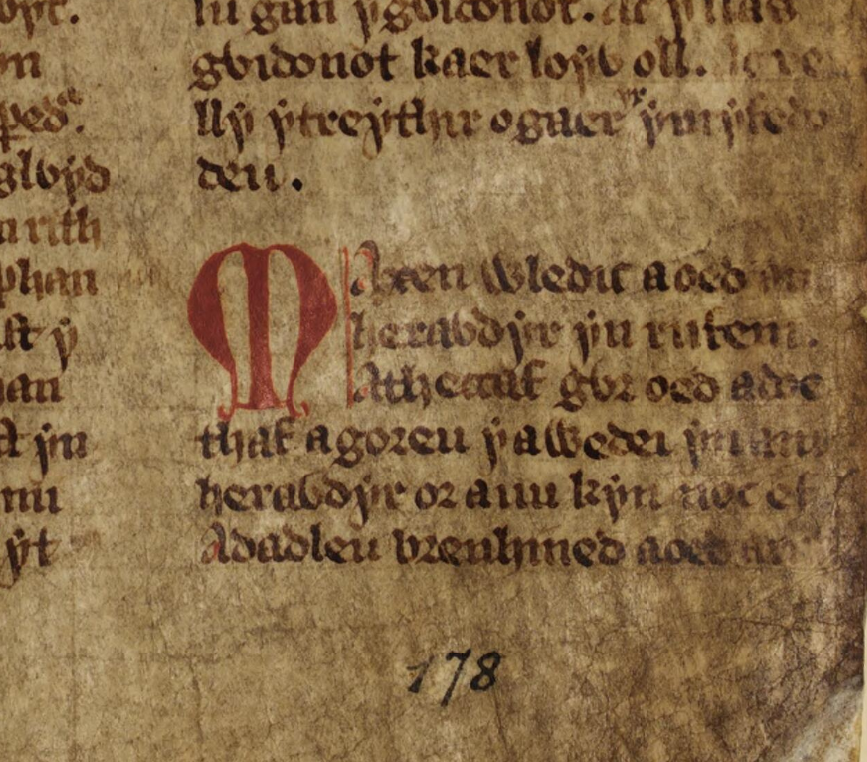
At the heart of much of this tradition are the medieval tales now known collectively as The Mabinogion.
What is The Mabinogion?
The Mabinogion is not one single medieval book but the modern collective name given to a group of early Welsh prose tales.
Some of their oldest surviving written versions are preserved in the White Book of Rhydderch, copied during the middle of the 14th Century, and the later Red Book of Hergest. The stories themselves are considerably older and were passed from generation to generation through Wales’ oral storytelling tradition before being committed to manuscripts.
The Four Branches of the Mabinogi introduce a remarkable cast including Pwyll, Rhiannon, Branwen, Bendigeidfran, Manawydan, Math, Gwydion and Blodeuwedd.
They are stories of love, betrayal, war, magic and transformation — often set in recognisable Welsh landscapes.
Rhiannon – the mysterious woman on the white horse
One of the best-known figures is Rhiannon, who first appears riding a brilliant white horse.
Although pursued, she cannot apparently be caught until she chooses to stop. She eventually marries Pwyll, Prince of Dyfed, and becomes one of the most memorable characters in Welsh mythology.
Her story combines the supernatural with very human themes of injustice, loyalty and resilience. Rhiannon remains particularly associated with Arberth – modern-day Narberth – in Pembrokeshire.
Blodeuwedd – the woman made from flowers
Then there is Blodeuwedd.
According to the Fourth Branch of the Mabinogi, the magicians Math and Gwydion create her from flowers as a wife for Lleu Llaw Gyffes.
What follows is certainly no fairy-tale marriage.
Betrayal and attempted murder eventually result in Blodeuwedd being transformed into an owl – one of the most striking transformations anywhere in Welsh mythology.
The Welsh Dragon
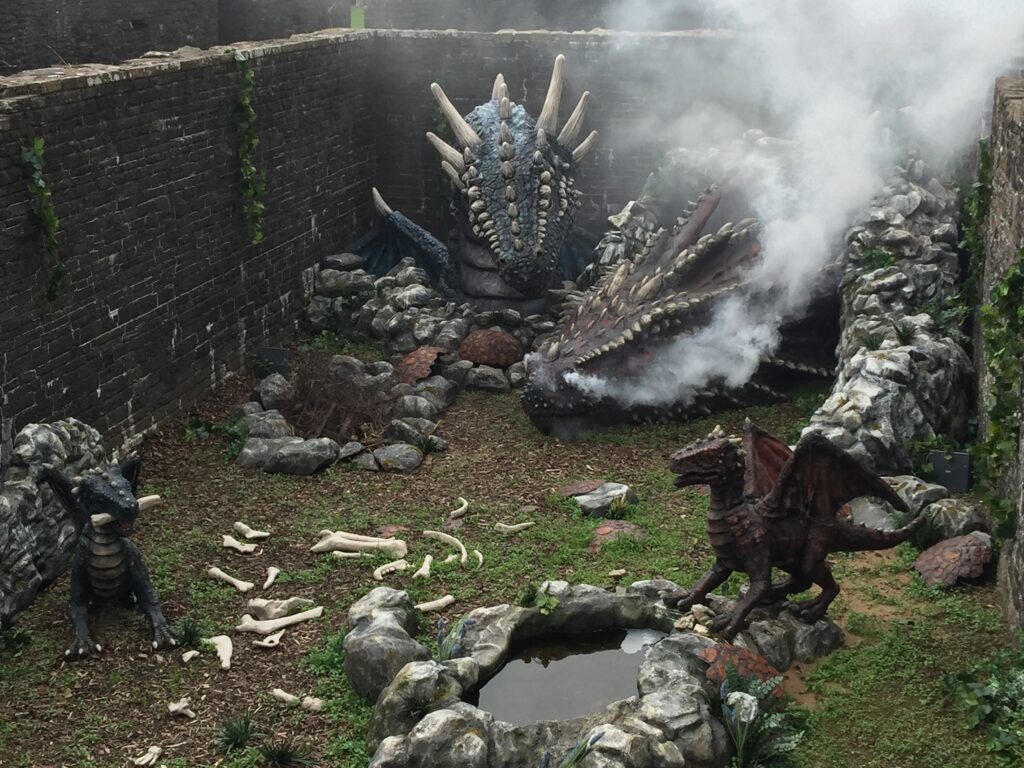
No mythical creature is more closely associated with Wales than Y Ddraig Goch – the Red Dragon.
The famous story tells of two dragons, one red and one white, fighting beneath Dinas Emrys near Beddgelert. The young Merlin – Myrddin in Welsh tradition – reveals that their underground struggle is responsible for the repeated collapse of King Vortigern’s fortress.
The victorious red dragon eventually became one of the great national symbols of Wales.
MORE: The Story of the Red Dragon of Wales
Was King Arthur Welsh?
Few legendary figures have travelled further around the world than King Arthur, but Wales has some of the oldest connections with the Arthurian tradition.
Welsh stories and poetry placed Arthur in Britain centuries before the later romances created the familiar world of Camelot, the Round Table and the Grail.
Visit Wales identifies more than 300 places in Wales claiming some form of Arthurian connection, ranging from caves and standing stones to lakes and mountains.
Welsh tradition even offers several possible resting places for Arthur’s sword, known in Welsh as Caledfwlch, including lakes such as Llyn Ogwen and Llyn Llydaw.
The Lady of Llyn y Fan Fach
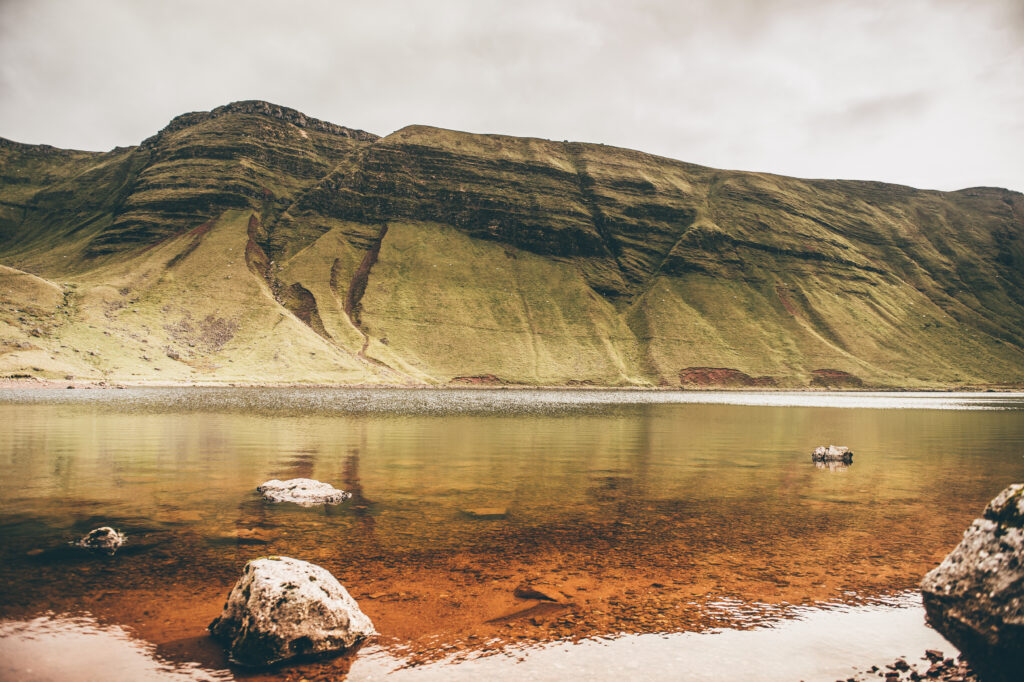
High in the Carmarthenshire landscape lies Llyn y Fan Fach, a dramatic glacial lake surrounded by the mountains of Bannau Brycheiniog.
Legend tells of a beautiful woman who emerged from the lake and married a local farmer under one unusual condition: if he struck her three times, she would return to the water.
Eventually the three blows occurred and she disappeared back into the lake, taking the farm animals with her.
Their sons, however, became famous healers associated with the tradition of the Physicians of Myddfai.
It is a wonderful example of how Welsh legend connects a supernatural story directly to a real landscape visitors can still explore today.
Gelert – Wales’ most famous faithful hound?
Few Welsh legends have a sadder ending.
At Beddgelert, the story tells of Prince Llywelyn returning from hunting to find his faithful hound Gelert covered in blood and his baby’s cradle overturned.
Believing Gelert has killed the child, Llywelyn kills the dog – only to discover his baby safe beside the body of a wolf Gelert had fought and killed.
There is a fascinating second story here, however.
The grave shown to visitors today was erected in 1802 by David Prichard of the Royal Goat Hotel, apparently as a way of attracting visitors to Beddgelert. The legend itself therefore gives us not only folklore, but an early example of Welsh tourism marketing.
What about Wales’ lost kingdoms?
Welsh folklore also reaches beneath the sea.
The legend of Cantre’r Gwaelod tells of a prosperous land said to have lain beneath what is now Cardigan Bay before being overwhelmed by the sea.
Stories of drowned bells supposedly still heard beneath the waves have helped keep the legend alive.
Whether approached as mythology, folklore or as an example of the way coastal communities remembered the power of the sea, Cantre’r Gwaelod is another story where landscape and legend become almost impossible to separate.
Why do Welsh myths still matter?
These stories survived because generations kept telling them.
They gave explanations to landscapes, entertained royal courts and communities, preserved older beliefs and provided heroes, villains and supernatural creatures that could be reshaped for different generations.
Today they also give travellers another way of discovering Wales.
A lake becomes somewhere an enchanted woman once appeared. A mountain becomes part of Arthurian country. A village carries the name of a legendary dog. A ruined hillfort supposedly once concealed battling dragons.
And somewhere between history, landscape and imagination lies a particularly Welsh kind of magic.
Did Ewe Know?
Before many Welsh stories were written down, they were kept alive by professional storytellers known as cyfarwyddiaid.
A cyfarwydd could earn a living by memorising and retelling stories, sometimes performing at the courts of Welsh rulers. The National Library of Wales describes this oral storytelling tradition as one of the ways tales including those of the Mabinogi survived from generation to generation.