Welsh Historical Figures: People Who Shaped Wales
THE history of Wales is not only the story of battles, castles, industry and political change. It is also the story of individuals – people whose ideas, ambitions, discoveries, writing and actions changed the country around them and, in some cases, had an influence far beyond Wales.
Over the centuries they have included kings and princes, rebels and reformers, poets and scholars, scientists and inventors, campaigners, doctors and cultural figures.
Some are celebrated throughout Wales. Others deserve to be much better known.
This growing Ewegottalove collection explores the people behind Welsh history – not simply what they did, but the Wales in which they lived and the legacy they left behind.
Rulers, Princes and Rebels
Long before the creation of the modern Welsh nation, rulers competed to control its kingdoms and territories.
Hywel Dda – Hywel the Good – ruled during the 10th century and became particularly associated with the codification of Welsh law. His reputation as a lawgiver survived for centuries, and the laws bearing his name became an important part of medieval Welsh identity.
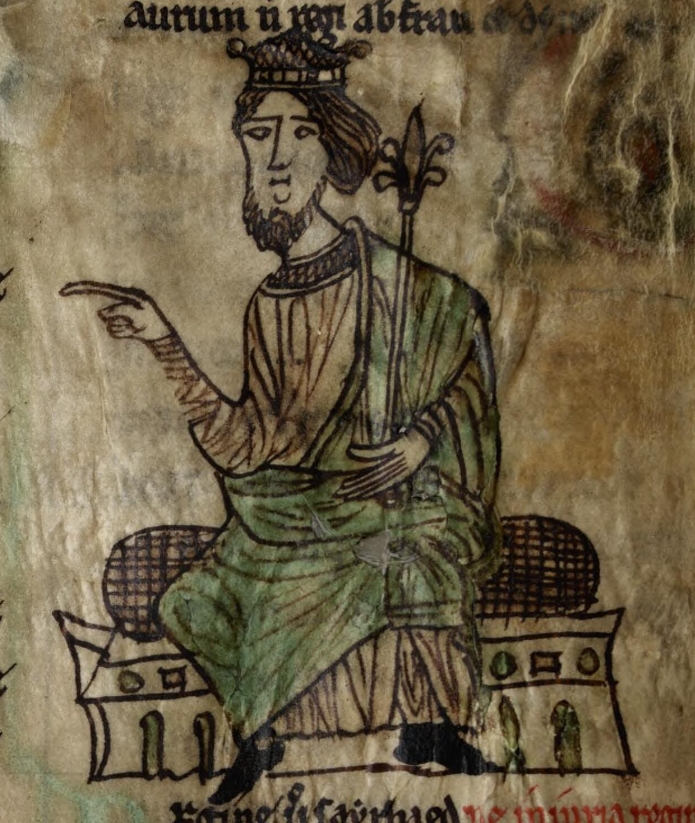
Three centuries later, Llywelyn ap Gruffudd, remembered as Llywelyn the Last, succeeded in having his title of Prince of Wales formally recognised by Henry III in the Treaty of Montgomery in 1267. His death in 1282 marked a decisive stage in Edward I’s conquest of Wales.
Then, in 1400, came Owain Glyndŵr.
His rebellion against English rule grew into a national uprising, and Glyndŵr proclaimed himself Prince of Wales. More than six centuries later he remains one of the most recognisable figures in Welsh history.
Read our Ewegottalove story of Owain Glyndŵr
Writers, Scholars and Guardians of Welsh Culture
Not everyone who changed Wales carried a sword.
Some did it with words.
William Morgan, born in the 16th Century, produced the first complete translation of the Bible into Welsh in 1588. Its influence went far beyond religion: Morgan’s work helped establish a literary form of Welsh and became an important landmark in the history of the language.
Then there is one of the most fascinating – and complicated – characters in Welsh cultural history.
Iolo Morganwg, born Edward Williams in Glamorgan in 1747, was a poet, antiquarian, radical thinker and extraordinary self-created authority on Welsh bardic tradition.
He established the Gorsedd of the Bards, which later became embedded within the National Eisteddfod. Yet Iolo also passed off some of his own inventions and writings as ancient material. His mixture of genuine scholarship, imagination and forgery makes him a particularly intriguing subject.
I think Iolo Morganwg should be one of our next individual profiles. He is exactly the sort of character that can make this new section distinctive.
Inventors, Thinkers and Pioneers
Welsh influence can sometimes be found in places we barely notice.
Every time someone writes 2 + 2 = 4, for example, they are using a symbol introduced by a Welshman.
Robert Recorde, born in Tenby around 1510, was a mathematician and physician who introduced the equals sign = in his 1557 book The Whetstone of Witte. His two parallel lines ultimately became one of the most recognisable mathematical symbols in the world.
The philosopher Richard Price, born at Llangeinor near Bridgend in 1723, worked in philosophy, mathematics and finance. His research into life expectancy and annuities helped put actuarial calculations for insurance and pensions onto a more scientific footing.
These are exactly the kinds of stories I would like this section to uncover: Welsh connections to things millions of people use or encounter without necessarily knowing where they originated.
Reformers and Campaigners
Industrialisation transformed Wales, but it also generated profound questions about working conditions, education, health and inequality.
Robert Owen, born in Newtown in 1771, became an influential social reformer through his work at New Lanark in Scotland and his wider ideas about education, working conditions and cooperative communities. His ideas became important in the development of the cooperative movement.
Frances Hoggan, born in Brecon in 1843, became the first Welsh woman to qualify as a medical doctor. She was also involved in campaigns for improved education for girls, women’s opportunities and public health.
Another remarkable Welsh woman was Betsi Cadwaladr, remembered particularly for nursing wounded soldiers during the Crimean War.
Their stories remind us that Welsh history cannot simply be told through kings, battles and politicians.
Wales and the Making of Modern Britain
The industrial communities of 19th- and 20th-century Wales also produced figures who became influential far beyond the country’s borders.
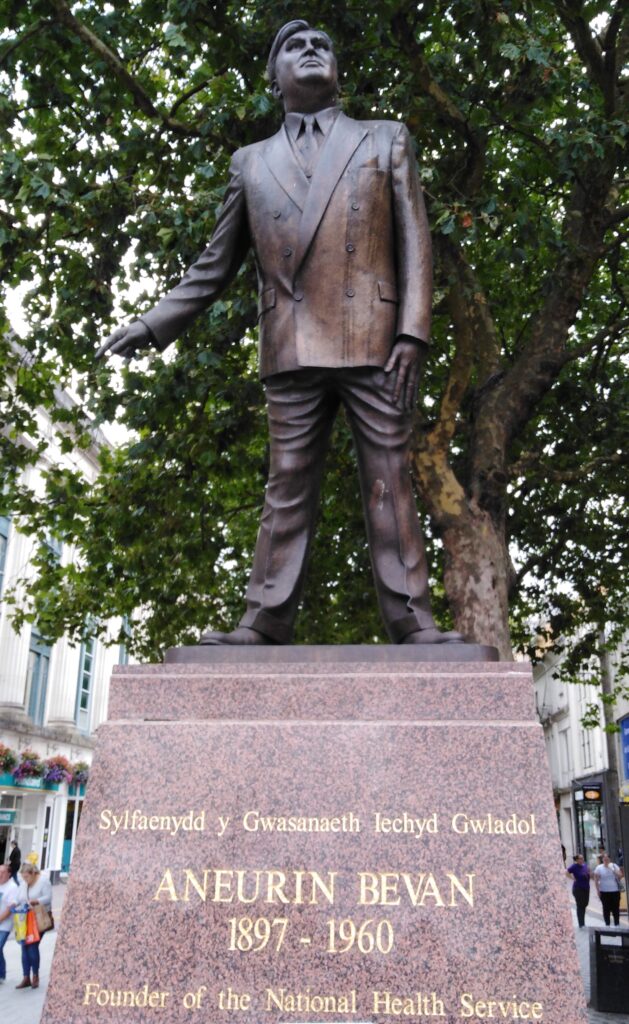
Among them was Aneurin Bevan, born into a mining family in Tredegar in 1897. As Minister of Health in the post-war Labour government, he was responsible for taking the legislation establishing the National Health Service through Parliament and overseeing its creation in 1948.
There are many more stories to add – from political leaders and campaigners to industrialists, educators, scientists, artists and people whose achievements have faded from popular memory.
And that is really the purpose of this section. Welsh Historical Figures will continue to grow.
Some of the people featured here changed the course of Welsh history. Some changed the way Wales saw itself. Others made discoveries, created institutions or fought for ideas which travelled around the world.
Together, their individual lives help tell the much bigger story of Wales.